
Paint Correction in Centennial, CO is a machine-polishing process used to reduce swirl marks, haze, light scratches, water spots, wash marks, and other defects that keep automotive paint from looking clear and glossy. When a vehicle has more damage than a light polish can address, a multi-stage process uses separate cutting and refining steps to improve the surface.
Ceramic Pro Denver performs Paint Correction for vehicles from Centennial, CO, Denver, CO, and surrounding communities. Our current service includes single-step and two-step correction choices based on paint condition.
A multi-stage polish does not mean removing as much clear coat as possible. The goal is to reduce visible defects while preserving the paint system. Some scratches can be removed. Others should only be reduced because chasing them farther would require taking away too much clear coat.
If your vehicle has swirls, haze, water spots, or scratches, call (303) 875-4356 or contact Ceramic Pro Denver to schedule a paint inspection.
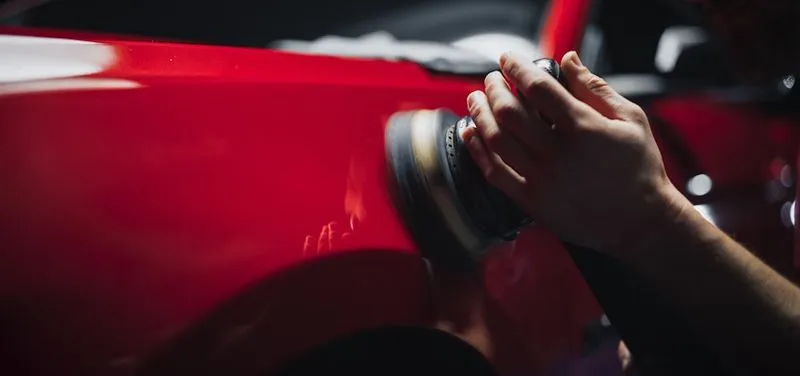
Paint Correction in Centennial, CO uses controlled machine polishing to reduce defects in the outer paint surface.
Most modern automotive paint systems include color covered by a transparent clear coat. That clear coat provides gloss and helps protect the color beneath it.
Daily use can leave marks in that surface.
Common causes include:
These defects can scatter reflected light, making paint look cloudy or covered in circular marks.
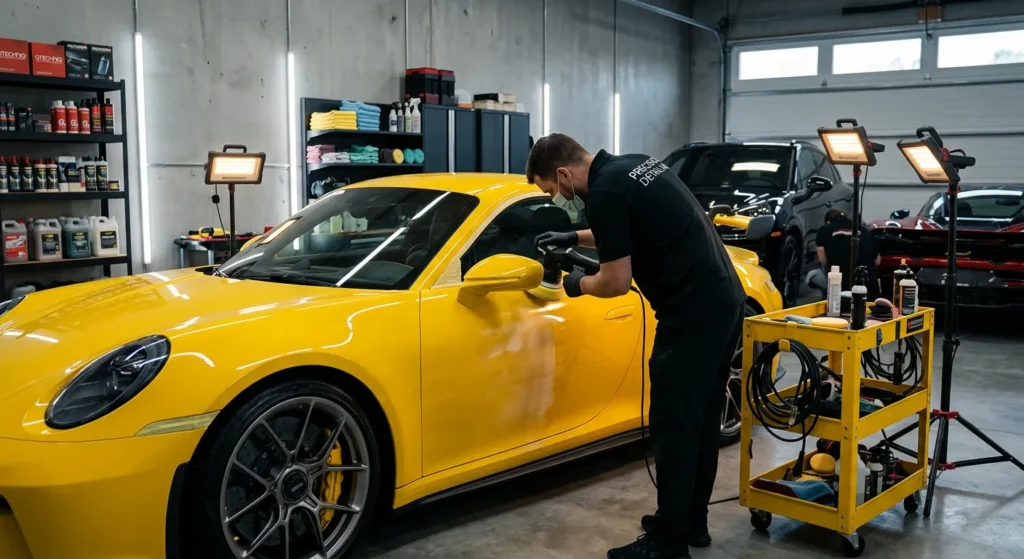
Ceramic Pro Denver states that its Paint Correction service targets swirls, light scratches, haze, and wash marks while restoring clearer reflections and deeper gloss.
A multi-stage Paint Correction in Centennial, CO uses separate machine-polishing steps rather than trying to complete the job with one pad and polish combination.
A typical process includes:
Ceramic Pro Denver currently lists a two-step paint correction package using two-stage machine polishing and compounding for vehicles with heavier defects.
The first polishing stage targets more noticeable surface damage.
The second stage refines the surface after the heavier polishing work.
Here is why that matters.
An aggressive polishing step may remove more defects, but the surface can need a finer finishing pass afterward. That second step can improve clarity and reduce fine polishing marks left behind during the cutting stage.
Paint Correction in Centennial, CO may improve many defects that remain within a polishable portion of the clear coat.
These can include:
Not every defect responds the same way.
A shallow swirl can sometimes disappear during polishing.
A deeper scratch may become much harder to see without being removed completely.
The condition of the paint determines how far the correction should go.
Ceramic Pro Denver states that deep gouges may remain visible even after paint correction. That is a safer expectation than trying to remove too much clear coat just to chase one deep mark.
Paint correction is not body repair or repainting.
It cannot replace missing paint or repair damage that has gone through the paint layers.
Multi-stage Paint Correction in Centennial, CO cannot repair:
Some defects need touch-up paint, refinishing, or collision repair instead.
A paint inspection helps separate polishable defects from damage that needs another type of repair.
A multi-stage Paint Correction in Centennial, CO starts with evaluating the surface.
Ceramic Pro Denver states that its team inspects paint under suitable lighting before deciding which correction method fits the vehicle.
The inspection can identify:
Lighting makes a large difference.
A vehicle may appear clean inside a dim garage but show heavy swirls once direct sunlight hits the paint.
Black and other dark colors often make surface marks easier to see. Light-colored vehicles can have the same type of damage even when it is less obvious.
Polishing should not begin on dirty paint.
Before Paint Correction in Centennial, CO, loose grime, dust, and road film need to be removed.
Ceramic Pro Denver states that its process includes paint decontamination before polishing.
The preparation process can involve:
Normal washing can leave some bonded contamination behind.
If those particles remain while a polishing machine moves across the panel, they can create new marks.
A clean surface gives the polishing system a better starting point.
Paint systems do not all respond the same way.
One vehicle may have harder clear coat that requires more cutting ability. Another may have a softer surface that marks easily and calls for a gentler approach.
A test spot helps determine how the paint reacts before polishing the whole vehicle.
The technician can compare:
Ceramic Pro Denver says it matches the pad, polish, and polishing method to the paint system rather than using the same process on every car.
For multi-stage Paint Correction in Centennial, CO, the test spot can help determine how much cutting is needed and how the surface should be refined afterward.
The heavier polishing step is often called cutting or compounding.
This stage uses an abrasive polishing liquid and pad selected for the paint.
The cutting stage may target:
The process levels a very small amount of the surface around a defect so the mark becomes less visible.
This is real surface correction rather than temporarily covering the mark.
The process needs restraint.
More cutting is not always the right answer.
Some scratches should remain partially visible if removing them completely would call for more clear-coat removal than makes sense.
After compounding, the vehicle may have fewer defects but still need a finer polishing stage.
The refining stage uses a less aggressive combination to improve:
This stage can make a large visual difference on black, dark gray, blue, red, and other paints that show fine marks under direct sun.
Think of the process this way:
The cutting stage handles more of the defect removal.
The refining stage cleans up the finish.
That combination is what separates multi-stage Paint Correction in Centennial, CO from a simple one-step polish.
Once polishing is complete, residue and polishing oils need to be removed so the actual condition of the finish can be seen.
Ceramic Pro Denver states that its process ends with paint preparation and panel-by-panel inspection.
The technician can look for:
If the next service is Ceramic Coating or Paint Protection Film, the surface can then be prepared for that product.
Not every vehicle needs several polishing stages.
Ceramic Pro Denver currently lists both one-step and two-step correction packages.
A one-step correction can fit vehicles with:
Ceramic Pro Denver currently describes its one-step package as single-stage machine compounding aimed at substantial defect reduction.
A two-step or multi-stage correction can make more sense for:
Ceramic Pro Denver currently lists its two-step package as two-stage machine polishing and compounding aimed at a higher level of defect removal than its one-step package.
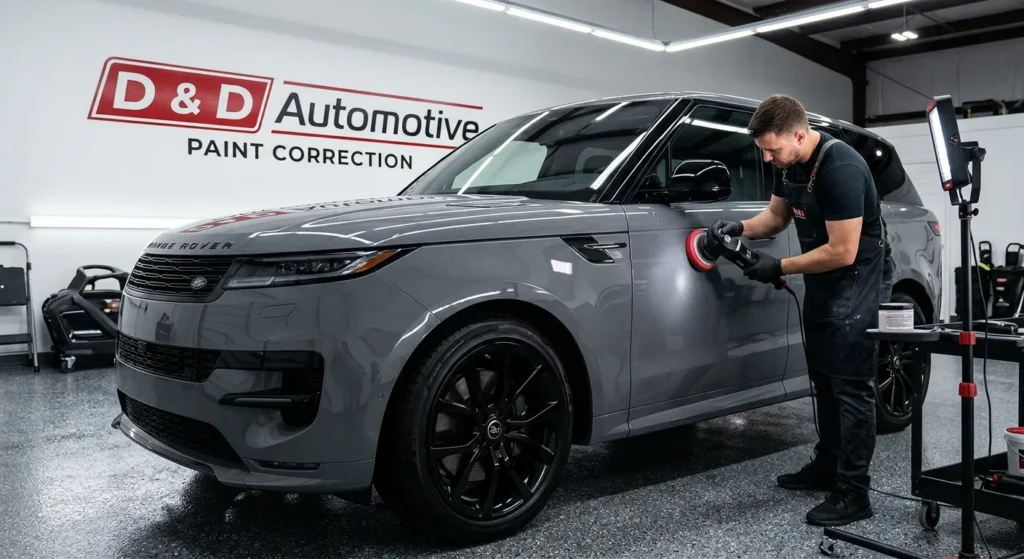
The paint condition should decide which route makes sense.
Paint polishing removes a small amount of material.
That makes clear-coat preservation part of responsible Paint Correction in Centennial, CO.
I-CAR states that average basecoat and clearcoat systems are commonly around 4 to 6 mils thick in total, with clear coat averaging around 2 mils of that amount. I-CAR warns that removing too much clear coat can contribute to hazing, discoloration, peeling, and finish failure.
Those figures are general references.
A specific vehicle can differ due to factory paint variation, previous polishing, collision repair, or repainting.
This is why the goal should be enough correction to create a worthwhile visual improvement without chasing every deep defect.
Some scratches can be removed.
Others should only be reduced.
A shallow scratch in the clear coat can respond well to machine polishing.
A deeper scratch may remain visible after correction because safely polishing all the way to its lowest point would require too much clear-coat removal.
Ceramic Pro Denver notes that deep gouges that catch a fingernail may remain after correction.
For Paint Correction in Centennial, CO, a paint inspection can help determine which marks are likely to improve before the polishing process begins.
It depends on how deeply the water deposit has affected the surface.
Some mineral deposits sit on top of the paint and may respond to decontamination.
Others can etch into the clear coat.
Etched water spots may require polishing.
The result can depend on:
A test section can show whether polishing reduces the mark.
Deep etching may remain if removing it completely would call for excessive clear-coat removal.
Sometimes.
A new vehicle can have paint defects before the owner takes delivery.
Cars can be:
Ceramic Pro Denver states that even new vehicles can arrive with transport marring or dealership wash marks.
A new vehicle may need little polishing.
Another may benefit from a one-step correction before ceramic coating or PPF.
The paint condition matters more than the odometer.
Ceramic Coating is transparent.
It does not erase swirl marks beneath it.
If visible paint defects bother you, Paint Correction in Centennial, CO should be discussed before the coating is applied.
A common sequence is:
Ceramic Pro Denver describes paint correction as creating a cleaner foundation for ceramic coating.
Once the paint looks the way you want it to look, the coating can be applied over that prepared surface.
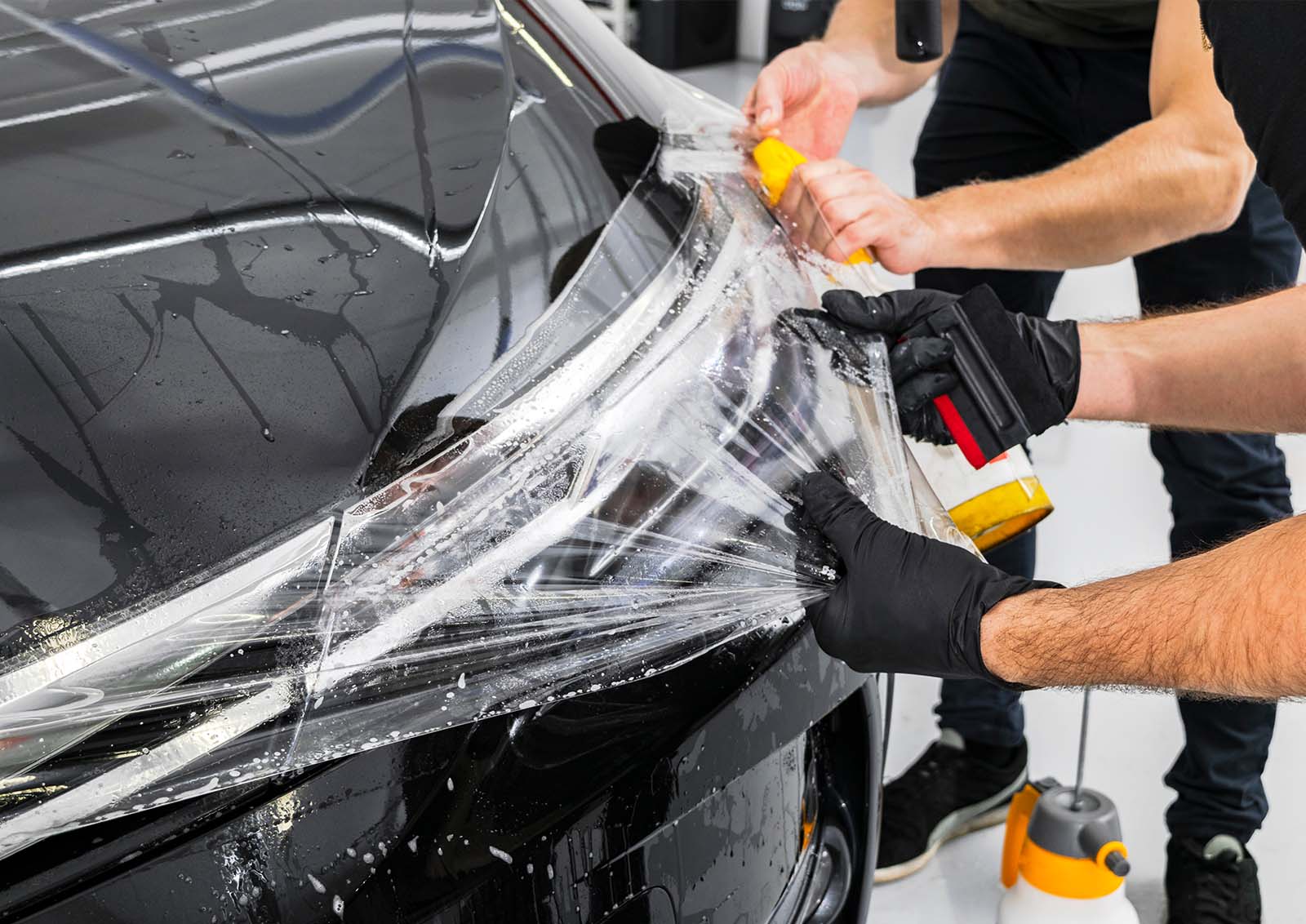
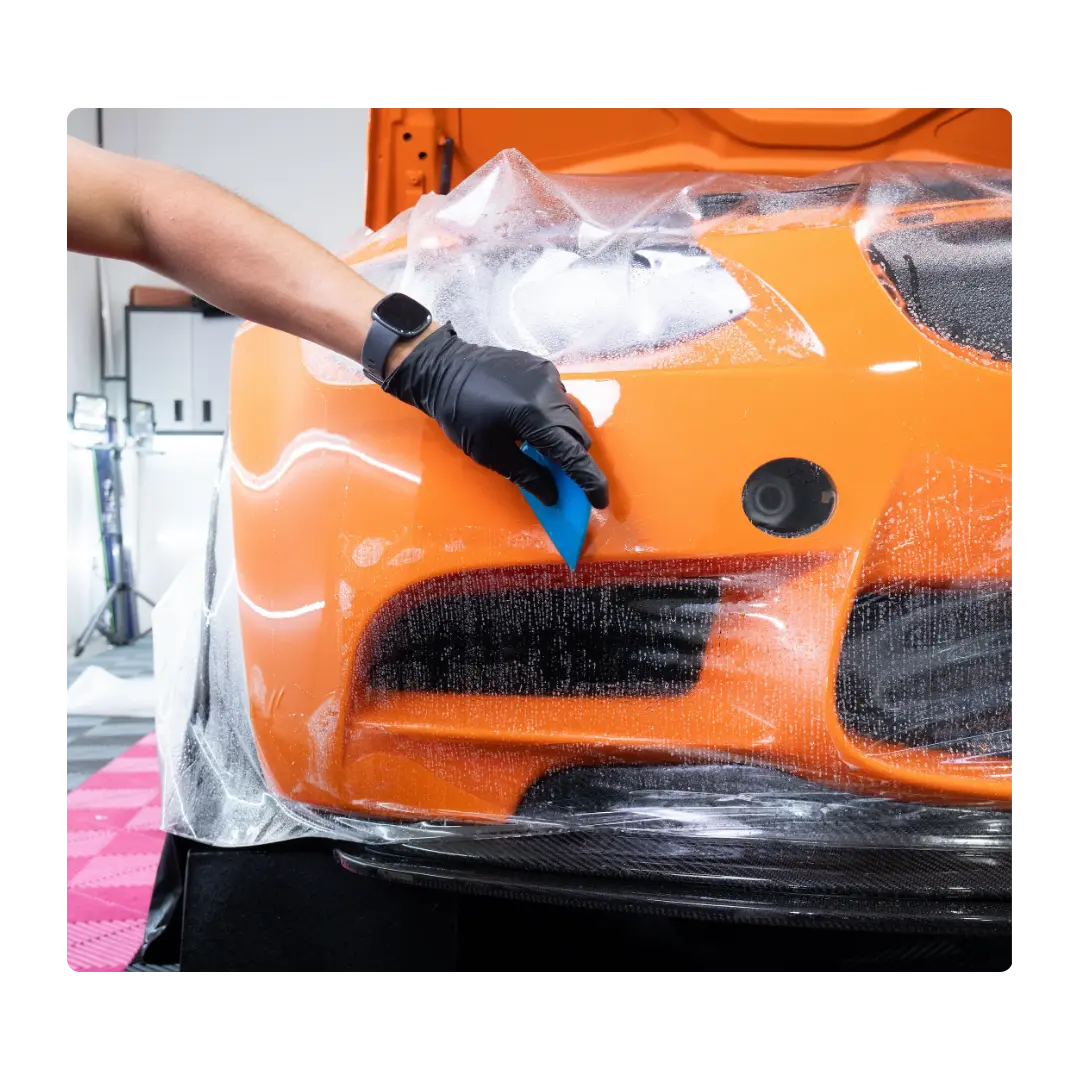
Transparent Paint Protection Film also allows the paint beneath it to remain visible.
Installing clear PPF over swirled paint does not automatically hide those swirls.
That is why paint inspection can make sense before film installation.
Correction may be considered on:
The vehicle does not always need a heavy multi-stage correction before PPF.
A clean newer finish may need much less preparation.
Centennial, CO and Denver, CO vehicles can collect road film, dust, winter residue, bugs, and other material throughout the year.
CDOT states that Colorado snow and ice operations use both liquid and solid de-icing products on highways.
More contamination can mean more frequent washing.
Poor washing can lead to more swirls.
That is why many paint defects are not caused directly by the road material itself. They occur when grit is moved across the paint during cleaning.
A careful wash process after Paint Correction in Centennial, CO can help slow the return of visible wash marks.
Paint correction improves the current finish, but it does not make the paint impossible to mark again.
After Paint Correction in Centennial, CO, use a careful wash routine.
A few useful habits include:
Paint correction gives you a cleaner finish.
Your maintenance routine helps keep it that way.
Ceramic Pro Denver provides Paint Correction in Centennial, CO from our shop at:
Ceramic Pro Denver
6333 South Racine Cir
Centennial, CO 80111
Phone: (303) 875-4356
Hours:
Monday-Friday: 8:30 AM-6:30 PM
Saturday: 9:00 AM-4:00 PM
Ceramic Pro Denver has served Colorado drivers for 21 years and also provides:
If your paint has swirls, haze, scratches, holograms, or water spots, call (303) 875-4356 or schedule a paint inspection.
Tell us your year, make, model, paint color, and the defects you see. Ceramic Pro Denver can compare a one-step polish with multi-stage Paint Correction in Centennial, CO based on the actual condition of your finish.
Multi-stage paint correction uses two or more machine-polishing steps. A cutting or compounding stage targets heavier swirls, haze, and suitable scratches. A finer polishing stage then refines the finish for clearer reflections and gloss.
No. Wax sits on top of the paint for a period of time. Paint correction uses abrasive polishing to reduce defects in the clear-coat surface itself.
Yes. Machine polishing removes a small amount of the upper clear-coat surface. I-CAR warns that excessive clear-coat removal can lead to finish problems, which is why polishing should be controlled.
No. Shallow scratches may disappear or become difficult to see. Deep scratches may remain because removing them completely could require too much clear-coat removal.
It can. Ceramic Pro Denver notes that new vehicles may arrive with transport marring or dealership wash marks. The paint should be inspected before deciding whether polishing is needed.
Paint correction can be performed before Ceramic Coating or clear Paint Protection Film when visible defects need to be reduced first. Both products allow the paint condition beneath them to remain visible.
Ceramic Pro Denver performs paint correction at 6333 South Racine Cir, Centennial, CO 80111. Call (303) 875-4356 or visit ceramicprodenverelite.com/contact-us to schedule a paint inspection.
Contact Ceramic Pro Denver to schedule a consultation for paint protection film, ceramic coating, window tint, or paint correction. Our team responds quickly with clear options matched to your vehicle, budget, and timeline. You can call us at (303) 875-4356 or visit us at 6333 South Racine Cir, Centennial, CO 80111 for in person guidance.
Explore the many services we offer by clicking the boxes below