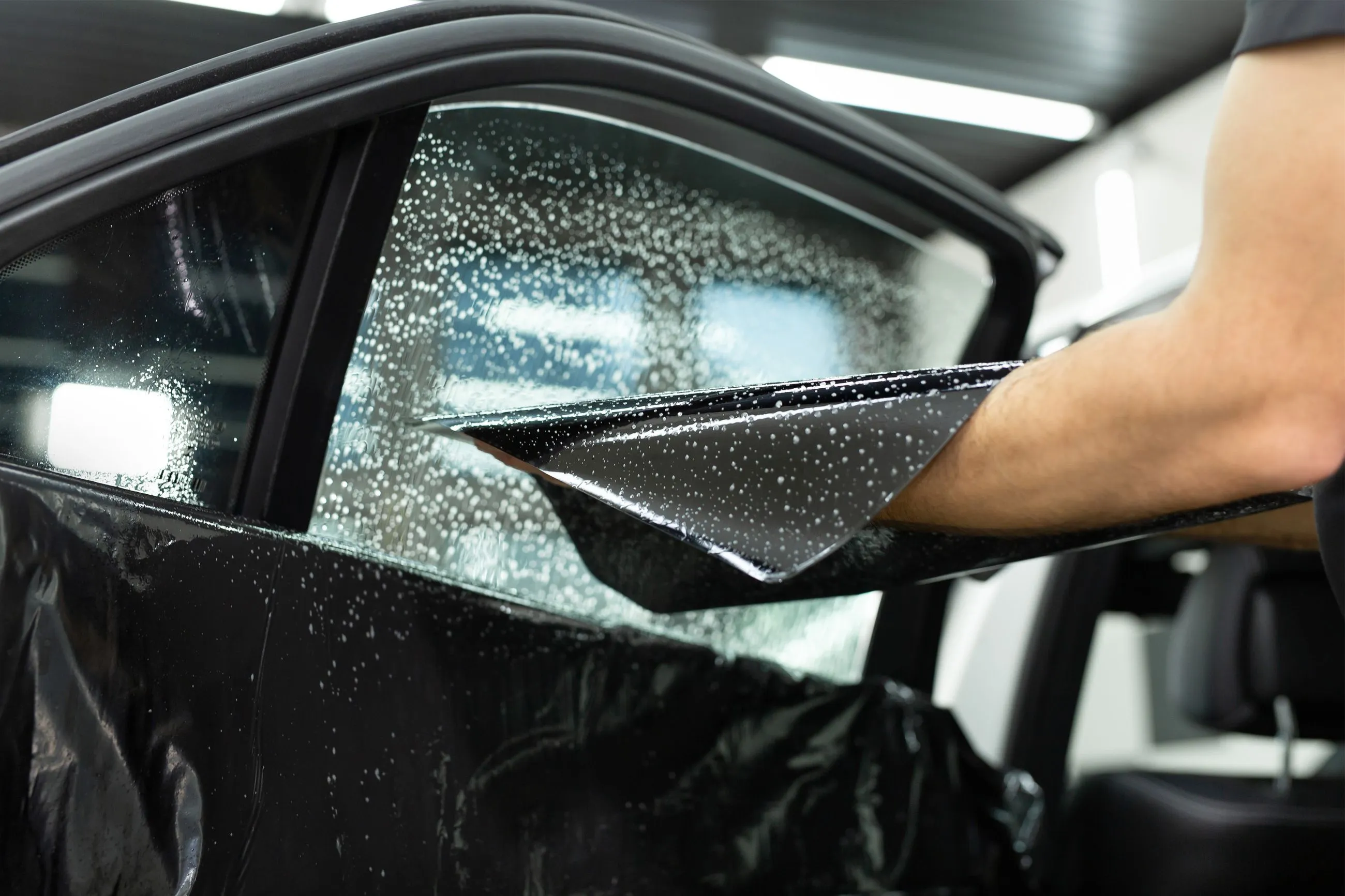

Window Tinting in Highlands Ranch, CO gives drivers several ways to reduce solar heat, glare, and UV exposure while changing the appearance and privacy level of automotive glass. The biggest mistake is choosing film only by how dark it looks.
Film grade matters too.
A darker window does not automatically reject more infrared heat than a lighter ceramic film. Ceramic Pro Denver currently offers several window-film choices, including Carbon X, Ceramic X, Ceramic IR, and Ultimate IR. Each is aimed at a different mix of heat control, shade, appearance, and infrared rejection.
That distinction can matter on the Colorado Front Range. The U.S. Environmental Protection Agency states that UV intensity rises about 6% for every kilometer of elevation above sea level. Highlands Ranch, CO drivers also deal with vehicles sitting outdoors during bright days, long commutes, large glass areas, and changing seasonal temperatures.
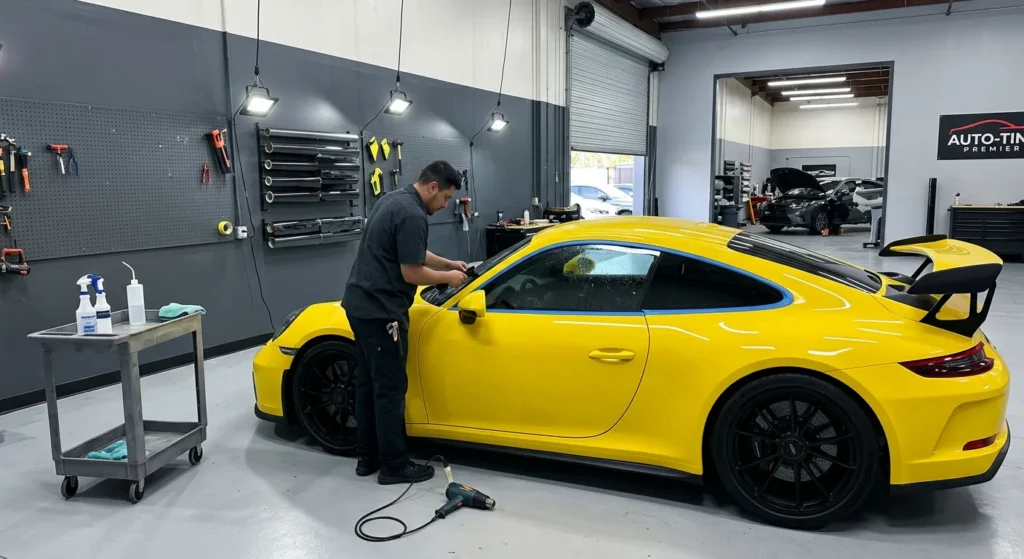
Ceramic Pro Denver installs Window Tint for drivers from Highlands Ranch, CO, Denver, CO, Centennial, CO, and surrounding communities.
Our shop is located at 6333 South Racine Cir, Centennial, CO 80111.
Call (303) 875-4356 or contact Ceramic Pro Denver to compare current film grades and shade choices for your vehicle.
Window Tinting in Highlands Ranch, CO can help drivers manage several issues at once.
Depending on the film and shade, automotive tint can help with:
Ceramic Pro Denver currently lists Highlands Ranch, CO within its service area.
That makes the Centennial, CO shop a nearby option for Highlands Ranch drivers who want to compare film choices in person rather than ordering tint based only on an online shade chart.
The right film depends on what bothers you about the vehicle now.
If the cabin feels hot, look closely at infrared rejection.
If glare is the bigger issue, shade becomes part of the discussion.
If you want front windows to look closer to factory rear glass, appearance matching matters.
If you drive frequently after dark, nighttime visibility deserves extra attention.
Colorado’s elevation affects ultraviolet intensity.
The EPA states that UV intensity increases about 6% per kilometer of elevation above sea level when calculating the UV Index.
Older EPA UV guidance describes the change as roughly 2% for every 1,000 feet of elevation.
Altitude is not the only thing affecting sunlight.
UV exposure also changes with:
Still, elevation is one reason drivers looking at Window Tinting in Highlands Ranch, CO may care about UV-blocking film.
Infrared heat and UV radiation are separate parts of the sunlight discussion.
A film should be compared for both rather than treating one number as if it describes everything the film does.
“Film grade” is a useful way to compare window tint beyond darkness.
Different products may use:
These differences affect what the film is designed to do.
Ceramic Pro Denver currently offers several film families across carbon and ceramic categories.
A driver choosing Window Tinting in Highlands Ranch, CO might start with Carbon X and then compare Ceramic X, Ceramic IR, and Ultimate IR as heat-control needs increase.
That does not mean every owner needs the highest tier.
A shorter commute and mostly garage-kept vehicle may call for a different choice than a family SUV that sits outside all afternoon.
VLT means visible light transmittance.
It describes how much visible light passes through the glass and film.
A higher VLT means a lighter-looking window.
A lower VLT means a darker-looking window.
Infrared rejection measures something different.
Infrared energy contributes to the heat you feel from sunlight.
A film can allow plenty of visible light through while still rejecting a large amount of infrared energy.
That is why VLT and infrared rejection should not be used interchangeably.
When comparing Window Tinting in Highlands Ranch, CO, ask about both numbers.
Not always.
This is one of the most useful points to understand before choosing automotive tint.
A dark carbon film may allow less visible light through than a lighter ceramic film while still rejecting less infrared energy.
That means you do not always need very dark glass to get strong heat control.
A lighter ceramic film may make more sense when you:
The film construction matters as much as the shade.
Ceramic Pro Carbon X uses nanocarbon particles combined with infrared-blocking materials.
Ceramic Pro Denver currently lists Carbon X at 74% film-only infrared blocking.
The shop also states that Carbon X blocks more than 99% of damaging UV radiation.
Carbon X can fit drivers who want:
Carbon X may make sense when you want an upgrade from a simple dyed film without moving immediately into a higher ceramic tier.
Ceramic Pro Ceramic X moves into ceramic nano-film construction.
Ceramic Pro Denver currently describes Ceramic X as a film aimed at heat reduction, glare control, and a rich black appearance that pairs well with factory automotive glass.
Ceramic X can fit owners who want:
For Window Tinting in Highlands Ranch, CO, Ceramic X can be worth comparing when you want ceramic construction but do not need the higher published infrared figures associated with Ceramic IR or Ultimate IR.
Ceramic Pro Ceramic IR places greater focus on infrared heat rejection.
Ceramic Pro Denver states that Ceramic IR uses nano-ceramic technology with an infrared-focused layer.
The current local product information lists up to 96% infrared heat rejection.
Ceramic IR also blocks more than 99% of UV radiation according to Ceramic Pro Denver.
This film can fit Highlands Ranch, CO drivers who care about:
Here is why the film grade matters.
If cabin heat is your main complaint, Ceramic IR may provide a more useful benefit than choosing a darker shade of a lower film tier.
Ceramic Pro Ultimate IR sits at the top of Ceramic Pro Denver’s current infrared-focused tint lineup.
Ceramic Pro states that Ultimate IR can block up to 99% of infrared radiation.
Ceramic Pro Denver also states that Ultimate IR can provide up to 95% IR blocking in an 80% VLT film.
An 80% VLT film has a nearly transparent appearance.
That makes Ultimate IR useful for drivers who want strong heat control without making every window look heavily tinted.
Ultimate IR can fit:
Here is a simple way to compare current Ceramic Pro Denver film choices:
| Film | Construction | Published Heat Information | UV Information | Good Fit For |
|---|---|---|---|---|
| Carbon X | Nanocarbon with IR-blocking material | 74% film-only IR blocking | 99%+ UV blocking | Drivers wanting carbon film, shade, and heat reduction |
| Ceramic X | Ceramic nano-film | Heat-control focused | UV protection within Ceramic Pro tint family | Drivers wanting ceramic construction and a dark factory-style look |
| Ceramic IR | Nano-ceramic with IR-focused layer | Up to 96% infrared heat rejection | 99%+ UV blocking | Drivers who place more weight on cabin heat |
| Ultimate IR | Nano-ceramic | Up to 99% infrared rejection | 99%+ UV blocking | Drivers seeking Ceramic Pro’s highest listed IR rejection |
Published figures should be read with the words “up to” in mind.
Heat-rejection values can depend on the exact film, shade, and testing method.
Ask which figure applies to the film you are considering.
Many drivers assume window tint needs to look dark to work well.
Ceramic films give you more flexibility.
Ceramic Pro Denver’s current Ultimate IR information is a good illustration.
The shop lists up to 95% IR blocking with an 80% VLT Ultimate IR film.
That means a nearly transparent film can still be designed around strong infrared rejection.
Lighter film can make sense if:
This is why Window Tinting in Highlands Ranch, CO should start with your goals rather than a shade number.
UV blocking and infrared rejection are not the same thing.
Infrared is tied closely to the heat you feel.
UV is associated with ultraviolet exposure.
Ceramic Pro Denver currently lists more than 99% UV blocking for several of its film choices, including Carbon X, Ceramic IR, and Ultimate IR.
The EPA’s current UV Index material confirms that elevation increases UV intensity.
That makes UV-blocking film worth discussing for Front Range drivers who spend many hours inside their vehicles.
The film works on UV passing through the treated glass.
It does not change the outdoor UV Index.
Interior materials can spend thousands of hours exposed to sunlight.
Vehicle cabins may contain:
UV-blocking window film can reduce UV passing through treated glass.
That can reduce one source of exposure to interior materials.
Tint should not be treated as a promise that an interior can never age or fade.
Time, heat, cleaning products, storage, and use still matter.
Highlands Ranch, CO has plenty of drivers using SUVs and crossovers for commuting, school trips, errands, sports, and road travel.
These vehicles often have larger glass areas and rear-passenger seating.
When choosing tint for an SUV, think about:
Factory rear privacy glass may look dark without providing the same infrared performance as an applied ceramic window film.
If heat control matters in the rear cabin, ask what the existing glass does before assuming it already provides everything you want.
Ceramic Pro Denver offers dedicated Tesla Window Tinting for Tesla owners.
Teslas and other EVs can have large glass areas, making film choice an important part of cabin comfort.
Tesla owners can compare:
Ceramic Pro Denver also provides:
If cabin heat is the main concern, compare Ceramic IR and Ultimate IR before choosing film only by appearance.
Many SUVs and crossovers come with darker rear glass from the factory.
Owners often want the front side windows to look closer to the rear.
There are two separate questions:
Those answers may not be the same.
Factory privacy glass can produce a darker look without using the same ceramic film found on newly tinted windows.
If appearance matching and heat control both matter, tell the installer.
Ceramic Pro Denver can compare film choices based on the vehicle’s existing glass.
Ceramic Pro Denver’s carbon and ceramic tint choices use non-metal construction.
That can matter in vehicles using:
Older metallic films can interact differently with radio-frequency signals.
Modern carbon and ceramic films are often selected partly because they can provide heat and UV control without relying on metallic construction.
This can be useful on newer vehicles with many connected systems.
The darkest available film is not the right choice for every driver.
If you spend a lot of time driving at night, visibility should be part of the conversation.
Ask yourself:
A lighter ceramic film can let more visible light through while still providing strong heat rejection.
That can make Ceramic IR or Ultimate IR worth comparing for night drivers who dislike extremely dark windows.
A vehicle parked outside for much of the workday has different needs from one kept in a garage.
If your vehicle spends hours outdoors, you may care more about:
Ceramic IR and Ultimate IR deserve a closer look when those concerns sit near the top of your list.
A garage-kept weekend car may place more weight on appearance than maximum heat rejection.
The right grade depends on actual use.
Before scheduling Window Tinting in Highlands Ranch, CO, think about what you want the film to change.
Ask yourself:
Then ask Ceramic Pro Denver:
These questions make it easier to compare the film rather than buying on darkness alone.
Ceramic Pro Denver currently lists Highlands Ranch, CO within its service area and installs several Ceramic Pro automotive window-film grades.
Current choices include:
Ceramic Pro Denver also provides:
Ceramic Pro Denver has served Colorado drivers for 21 years and is the Ceramic Pro Elite Dealer for the Denver metro area.
Ceramic Pro Denver
6333 South Racine Cir
Centennial, CO 80111
Phone: (303) 875-4356
Hours:
Monday-Friday: 8:30 AM-6:30 PM
Saturday: 9:00 AM-4:00 PM
If you are looking for Window Tinting in Highlands Ranch, CO, call (303) 875-4356 or schedule an appointment.
Tell Ceramic Pro Denver your vehicle, current glass, parking habits, night-driving needs, and whether heat rejection, privacy, UV blocking, or appearance matters most.
The right grade depends on your goals. Carbon X can fit drivers wanting carbon-based heat and UV control. Ceramic IR and Ultimate IR are better comparisons when infrared heat rejection carries more weight in the decision.
Ceramic Pro Denver currently lists Ultimate IR at up to 99% infrared rejection. Ceramic IR is listed at up to 96% infrared heat rejection.
No. Window darkness measures visible light transmission, while infrared rejection measures another part of solar energy. A lighter ceramic film can reject more infrared energy than a darker lower-grade film.
Yes. Ceramic Pro Denver states that Ultimate IR can provide up to 95% IR blocking in an 80% VLT film, which has a nearly transparent appearance.
Ceramic Pro Denver currently lists more than 99% UV blocking for several films, including Carbon X, Ceramic IR, and Ultimate IR. EPA guidance also confirms that UV intensity rises with elevation.
Ceramic tint can make sense for vehicles with larger glass areas when heat rejection is a major concern. Ceramic Pro Denver offers dedicated Tesla Window Tinting and also works with SUVs, trucks, cars, and EVs.
Ceramic Pro Denver serves Highlands Ranch, CO from 6333 South Racine Cir, Centennial, CO 80111. Call (303) 875-4356 or visit ceramicprodenverelite.com/contact-us to compare current film grades.
Contact Ceramic Pro Denver to schedule a consultation for paint protection film, ceramic coating, window tint, or paint correction. Our team responds quickly with clear options matched to your vehicle, budget, and timeline. You can call us at (303) 875-4356 or visit us at 6333 South Racine Cir, Centennial, CO 80111 for in person guidance.
Explore the many services we offer by clicking the boxes below