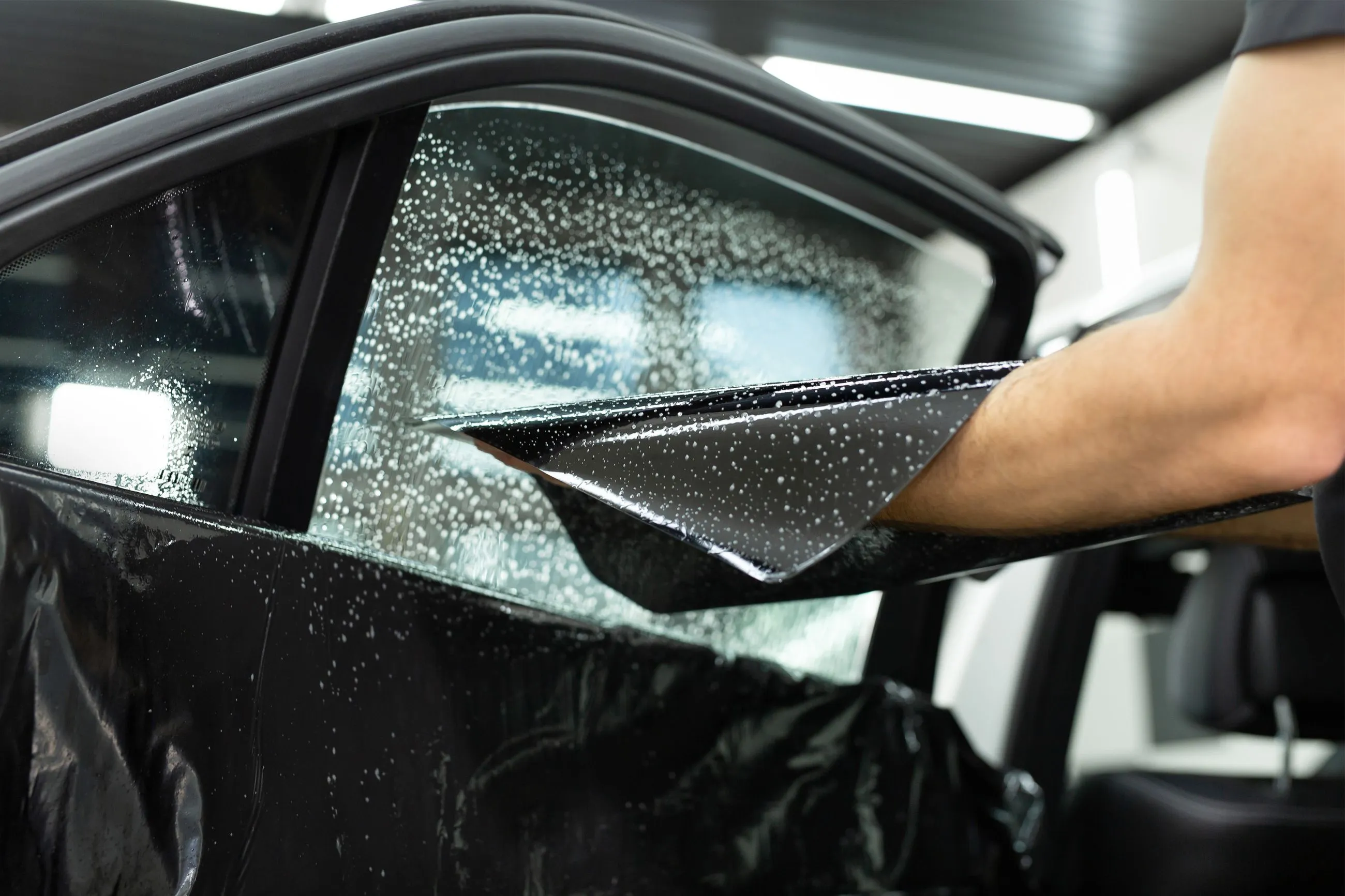

Tesla Window Tint in Parker, CO can make a noticeable difference when bright sun, large glass panels, and long drives leave the cabin warmer than you would like. Tesla vehicles already use glass designed to provide UV protection, but heat, glare, privacy, and shade are separate concerns. That is where the right automotive window film can change the way your Model 3, Model Y, Model S, or Model X feels during daily use.
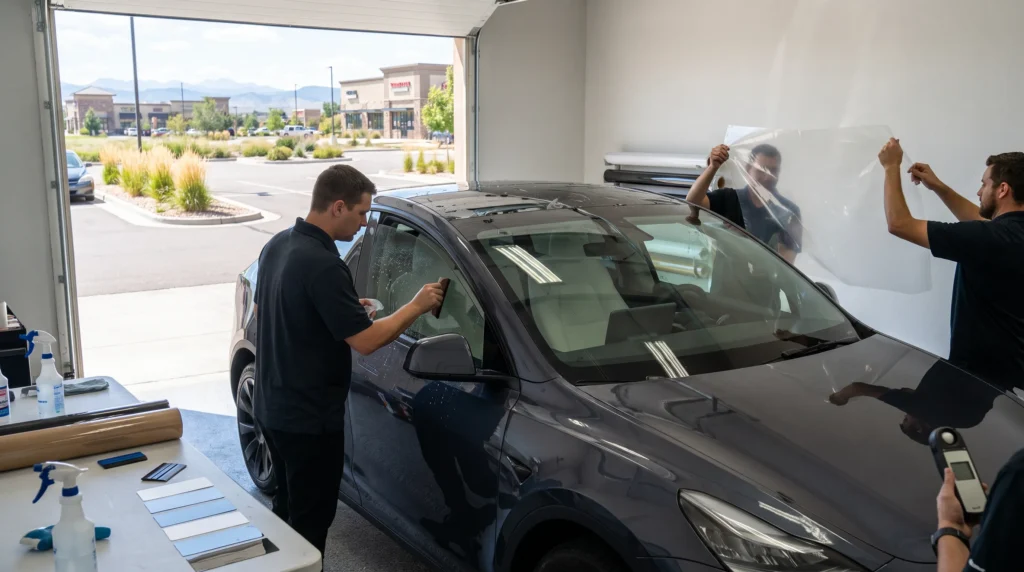
At Ceramic Pro Denver, we install Ceramic Pro window films for Tesla owners from Parker, CO, Centennial, CO, Denver, CO, and surrounding communities. Our Tesla tint work takes frameless side glass, large rear windows, panoramic roof sections, factory glass tone, film shade, and Colorado window tint law into account.
The tricky part is deciding what should be tinted and how dark the finished glass should be. Do you tint the roof? Should the front windows match darker factory rear glass? Can a lighter film still reduce heat? What does 27 percent VLT really mean in Colorado?
Let’s break it down.
Tesla Window Tint in Parker, CO is about more than making the glass darker.
Tesla cabins use a large amount of glass compared with many traditional vehicles. Depending on the model and model year, that can include a broad windshield, frameless side windows, a large rear glass section, and panoramic roof glass.
More glass means more sunlight enters the cabin.
Parker, CO drivers may spend time traveling toward Centennial, CO, Denver, CO, or other parts of the metro area. Bright afternoon sun can hit the cabin through the side glass for much of that trip. Winter can bring another concern when low-angle sunlight and snow glare make visibility uncomfortable.
A good window film can help with:
The shade does not have to be extremely dark to provide heat control. Film construction matters as much as visible darkness.
That difference becomes especially useful on a Tesla.
One of the first questions Tesla owners ask is whether the panoramic roof needs tint.
Tesla already gives its glass UV protection. Tesla owner documentation states that roof glass, windshields, and windows provide a high level of UV protection, with the glass components scoring below 2 on the UV Index scale.
That means a Tesla owner should not assume the factory roof glass has no UV filtering.
So why consider roof tint?
Heat and glare.
UV radiation and infrared heat are not the same thing. A glass panel can provide strong UV filtering while you still feel warmth from sunlight entering the vehicle.
This is one reason Tesla Window Tint in Parker, CO should be chosen by film performance rather than darkness alone.
A lighter ceramic film can target infrared heat while keeping the roof’s open-glass appearance. A driver who enjoys the panoramic view may prefer that approach instead of turning the roof dramatically darker.
There is no single answer for every Tesla.
Start with how the cabin feels during the type of driving you actually do.
A Tesla parked outdoors in Parker, CO for hours at a time may feel different from one kept in a garage. A Model Y with a large roof area may create a different cabin experience from another vehicle with less overhead glass.
If roof heat bothers you, ask about a high-infrared-rejection film in a light shade.
Ceramic Pro states that its Ultimate IR film is available in lighter VLT levels and that its 80 percent VLT film can block up to 95 percent of infrared radiation under the manufacturer’s test conditions. Ceramic Pro also identifies Ultimate IR as suitable for large automotive glass such as panoramic sunroofs.
That makes lighter film worth discussing when you want heat control without a very dark roof.
Now here’s the thing. Tesla also warns in its owner documentation that it does not accept responsibility for damage associated with window treatments. Before adding film to roof glass, discuss your exact Tesla model, model year, glass type, film, and warranty questions with the installer.
A removable roof shade is another route for some owners who mainly want less overhead light.
A common mistake is assuming darker tint always means better heat rejection.
It does not.
Window tint darkness is usually described through Visible Light Transmittance, or VLT. Heat rejection depends on the materials and construction of the film.
A dark low-grade film may reduce visible light while doing less with infrared heat than a much lighter ceramic film.
This matters for Tesla Window Tint in Parker, CO because many owners want a cooler cabin without making every window look extremely dark.
Ceramic Pro’s current tint family includes films designed around different levels of heat rejection. Ceramic Pro Ultimate IR focuses heavily on infrared heat control, while Ceramic Pro Ceramic IR combines ceramic construction with an infrared layer.
Ceramic Pro states that Ceramic IR can block up to 96 percent of infrared heat, depending on film shade and test conditions. Ultimate IR is rated up to 99 percent infrared rejection in certain configurations.
What this means is that you can discuss appearance and heat as two separate decisions.
You do not automatically need the darkest film to get strong heat control.
VLT means Visible Light Transmittance.
The percentage describes how much visible light passes through the glass.
A higher percentage means more light passes through.
A lower percentage means the window appears darker.
Here is a quick way to think about it:
| VLT | General Appearance |
|---|---|
| 80% | Nearly clear |
| 70% | Very light |
| 50% | Light to medium |
| 35% | Medium-dark |
| 30% | Dark |
| 20% | Very dark |
| 5% | Extremely dark |
The final reading is what matters for legal limits.
If you install a film labeled 30 percent onto glass that already reduces some visible light, the finished window may meter below 30 percent.
That is why Tesla Window Tint in Parker, CO should not be selected only by the number printed on a film sample.
Factory glass plus added film determines the finished VLT.
A professional shop can discuss the starting glass, selected film, and expected final reading before installation.
Colorado Revised Statutes § 42-4-227 sets the state’s window tint rules for Colorado-registered vehicles.
For most windows other than the windshield, the law generally requires at least 27 percent visible light transmittance.
There is an exception for windows behind the driver. Rear side windows and the rear window may allow less than 27 percent light through if the front side windows and windshield each allow at least 70 percent light through.
The law also says window treatment cannot have a metallic or mirrored appearance.
For the windshield, Colorado requires at least 70 percent light transmittance. The law permits nontransparent material along the uppermost part of the windshield when the bottom edge extends no more than four inches down and the other statutory conditions are met.
Here is the short version for a Colorado-registered Tesla:
| Glass Area | Colorado Rule |
|---|---|
| Windshield | At least 70% VLT, apart from the permitted upper strip |
| Front side windows | Generally at least 27% VLT |
| Rear side and rear glass | Generally at least 27% VLT, with an exception allowing darker rear glass when the front sides and windshield are at least 70% VLT |
| Mirrored or metallic appearance | Not permitted |
This article is not legal advice. Window tint rules can change, and the final measured glass is what matters. Confirm the current rule when you schedule your installation.
Front windows are where appearance, heat control, visibility, and Colorado law come together.
Some Tesla owners want the front side windows to look closer to darker factory rear glass. Others prefer a lighter film that keeps the cabin bright.
Before chasing a perfect visual match, remember that factory rear glass and aftermarket tint do not always behave the same way.
A rear window may look dark because of privacy glass, while the added film on the front can have its own optical and heat properties.
The catch is that matching the appearance does not automatically mean matching the VLT reading.
Your installer should look at both.
For Tesla Window Tint in Parker, CO, a lighter ceramic film can also make sense for drivers who care more about infrared heat than privacy.
A Parker, CO commuter who drives after dark often may prefer more visible light than someone who mainly drives during the day.
There is room to choose based on how the vehicle is used.
If your Tesla came with darker rear glass, you may wonder why you would add film there.
Factory privacy glass can darken the appearance, but darkness alone does not tell you how much infrared heat the glass rejects.
Adding a performance window film can change heat rejection while also adjusting the shade.
This is why Ceramic Pro Denver looks at the complete glass setup instead of assuming the rear windows should be left alone.
A Model Y owner may want front windows that visually match the rear.
Another owner may want lighter front glass but add heat-rejecting film to the rear and roof.
Someone else may want one consistent film family around most of the cabin.
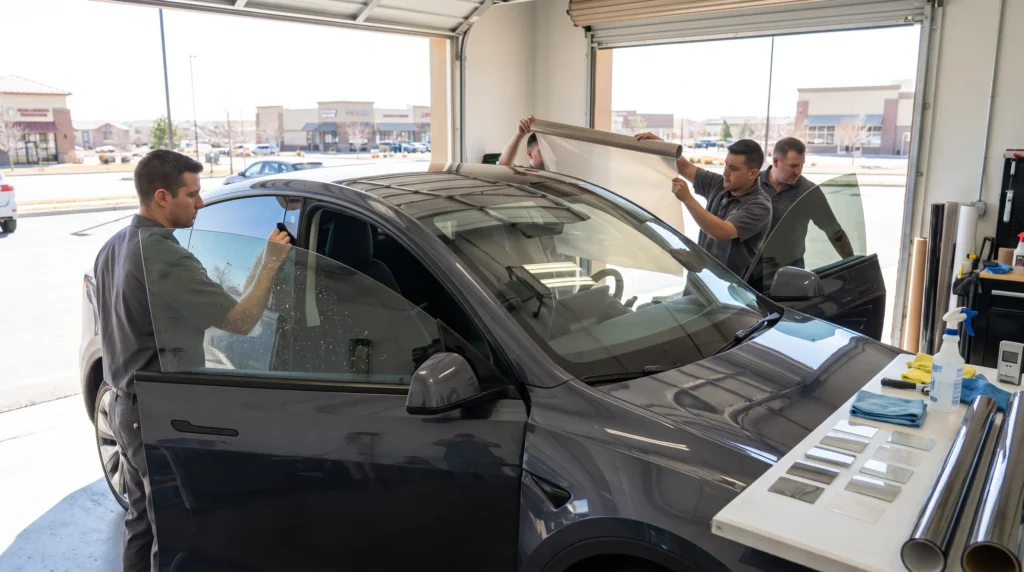
Our Tesla window tinting service covers Model 3, Model Y, Model S, and Model X, with film selection based on the vehicle and the owner’s goals.
The windshield deserves extra care because Colorado requires at least 70 percent visible light transmittance through it.
A film labeled 70 percent does not guarantee that the completed windshield will meter at 70 percent.
The factory windshield already has its own light transmission level. Adding film changes the completed glass measurement.
This is where very light heat-rejecting films may enter the conversation.
Ceramic Pro Ultimate IR is available in light shades, including an 80 percent VLT option. Ceramic Pro reports high infrared rejection even at that light shade.
That does not mean any windshield film is automatically legal.
The final windshield must meet Colorado’s light-transmission rule.
Here’s what matters. Talk to the installer about the actual glass and finished VLT before choosing a windshield film.
Ceramic Pro Denver carries several film choices for Tesla owners.
Carbon X is a non-metal carbon film built for heat and glare control while keeping phone, GPS, and keyless-entry signals clear.
It can work well for a Tesla owner looking for a darker appearance and heat reduction without a metallic film.
Ceramic X uses ceramic film construction and comes in shades suited to drivers who want heat control with a rich black appearance.
It can also be useful when trying to bring front glass closer to darker factory rear glass.
Ceramic IR is aimed at drivers who place more emphasis on infrared heat rejection.
Ceramic Pro states that Ceramic IR can block up to 96 percent of infrared heat in certain configurations while remaining non-metal.
That makes it a strong candidate for Tesla Window Tint in Parker, CO when cabin temperature is a larger concern than going very dark.
Ultimate IR is Ceramic Pro’s highest heat-rejection film line.
Ceramic Pro publishes infrared rejection of up to 99 percent for Ultimate IR, with up to 95 percent IR blocking available even with the nearly clear 80 percent VLT film.
That combination can be useful for panoramic roof sections and drivers who want heat control while keeping a lighter glass appearance.
Start with three questions.
If the cabin feels uncomfortable after sitting outside or during long sunny drives, look closely at infrared rejection rather than choosing by darkness alone.
Some owners like a deep tint around the side and rear glass. Others want the exterior to stay close to the factory appearance.
Both approaches can use heat-rejecting film.
Darker glass reduces visible light in both directions. If you frequently drive after sunset, think carefully about side-window visibility before choosing a dark shade.
The real question is what you want the finished Tesla to do.
If heat is first on your list, compare Ceramic IR and Ultimate IR.
If appearance and privacy matter more, compare the available shades across Carbon X, Ceramic X, Ceramic IR, and Ultimate IR.
If you want the roof treated, discuss a light high-IR film so the panoramic feel is not lost.
Tesla glass deserves an installer familiar with the vehicle.
Model 3, Model Y, Model S, and Model X can involve frameless doors, large rear glass sections, broad roof glass, tight trim areas, and different factory glass tones.
Ceramic Pro Denver’s Tesla tint service considers those details before film goes on.
The team can also coordinate tint with other Tesla services when you want more than one job completed.
Relevant options include:
Ceramic Pro Denver has served Colorado vehicle owners for 21 years and is a Ceramic Pro Elite Dealer for the Denver metro area.
Our shop is at 6333 South Racine Cir, Centennial, CO 80111, serving Tesla owners from Parker, CO, Centennial, CO, Denver, CO, and nearby communities.
Tesla Window Tint in Parker, CO comes down to more than picking a dark piece of film.
The right setup considers:
If you are unsure which shade or film fits your Tesla, bring the vehicle to Ceramic Pro Denver and compare the choices in person.
Call (303) 875-4356 or use the Ceramic Pro Denver contact page to schedule a Tesla window tint consultation.
Yes. Tesla owner documentation states that its roof glass, windshield, and windows provide strong UV filtering, with glass components scoring below 2 on the UV Index scale. Owners may still choose tint for infrared heat rejection, glare control, privacy, or appearance.
It depends on how much overhead heat and glare bother you. A lighter high-IR film may reduce infrared heat without making the panoramic roof extremely dark. Discuss your model, model year, roof glass, and warranty questions before installation.
Colorado generally requires at least 27 percent VLT through non-windshield windows on Colorado-registered vehicles. Rear windows may be darker under the statutory exception when the front side windows and windshield each allow at least 70 percent light through. The windshield itself must allow at least 70 percent light transmission, subject to the permitted upper strip.
Not necessarily. Factory glass already changes visible light transmission. Once film is applied, the glass and film work together. A film labeled 30 percent may produce a finished reading below 30 percent.
No. Film construction has a large effect on infrared heat rejection. A lighter ceramic film can reject more infrared heat than some darker films. Compare the manufacturer’s heat data rather than shade alone.
The team can compare available shades with the existing rear glass and help you choose a close visual match where Colorado law permits it. The finished VLT still needs to stay within applicable legal limits.
Ceramic Pro Denver is located at 6333 South Racine Cir, Centennial, CO 80111. We serve Tesla owners from Parker, CO, Centennial, CO, Denver, CO, and nearby areas. Call (303) 875-4356 or visit our contact page to schedule an appointment.
Tesla Window Tint in Parker, CO should make sense for the way you use your car.
If the roof feels hot, ask about light high-IR film.
If you want more privacy, compare darker legal shades.
If your front glass looks much lighter than the rear, ask about a shade match.
If heat is your main concern, compare the published infrared performance of Ceramic Pro Ceramic IR and Ultimate IR instead of choosing by darkness alone.
Ceramic Pro Denver can show you film choices, discuss final VLT, and help you choose coverage for your Model 3, Model Y, Model S, or Model X.
Call (303) 875-4356 or visit the Ceramic Pro Denver contact page to schedule Tesla Window Tint in Parker, CO.
Contact Ceramic Pro Denver to schedule a consultation for paint protection film, ceramic coating, window tint, or paint correction. Our team responds quickly with clear options matched to your vehicle, budget, and timeline. You can call us at (303) 875-4356 or visit us at 6333 South Racine Cir, Centennial, CO 80111 for in person guidance.
Explore the many services we offer by clicking the boxes below