
Auto Window Tinting in Aurora, CO can help reduce cabin heat, glare, UV exposure, and the amount of visible light entering your vehicle. Before choosing a shade, you also need to understand Colorado’s window tint rules and the difference between visible darkness and heat rejection.
Those are two separate measurements.
A darker film lets less visible light through the glass. A higher-grade ceramic film may reject more infrared heat even when it looks lighter.
That means the darkest film is not automatically the best film for keeping your cabin cooler.
Ceramic Pro Denver installs Window Tint for drivers from Aurora, CO, Denver, CO, Centennial, CO, and surrounding communities. Current Ceramic Pro film choices include Carbon X, Ceramic X, Ceramic IR, and Ultimate IR.
Our shop is located at 6333 South Racine Cir, Centennial, CO 80111.
Call (303) 875-4356 or contact Ceramic Pro Denver to compare shade choices and heat-rejection levels for your vehicle.
Colorado tint laws can change. The legal information below is based on Colorado Revised Statutes § 42-4-227 and the current 2026 Colorado statutory publication system. Confirm current requirements before installation.
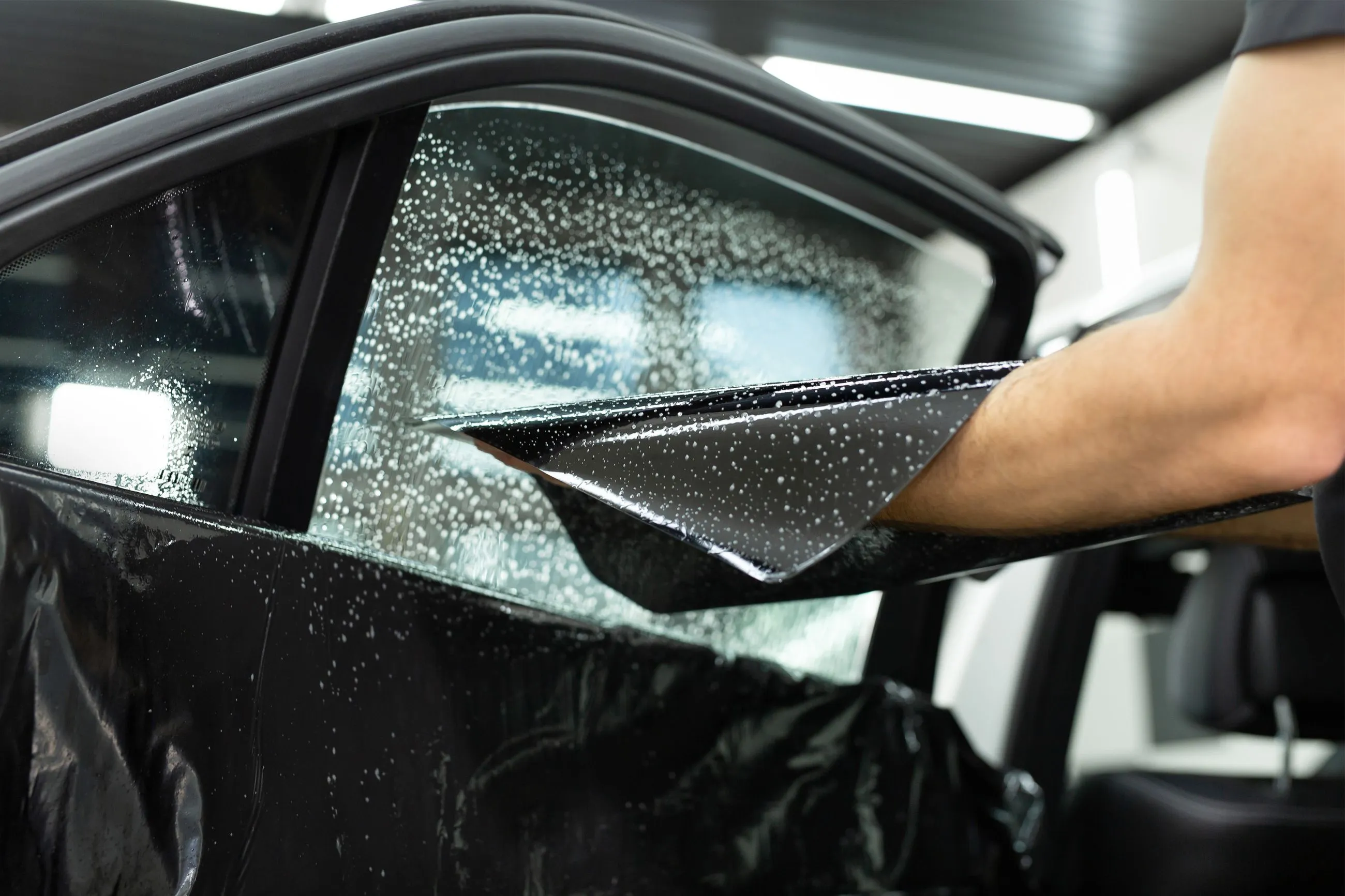
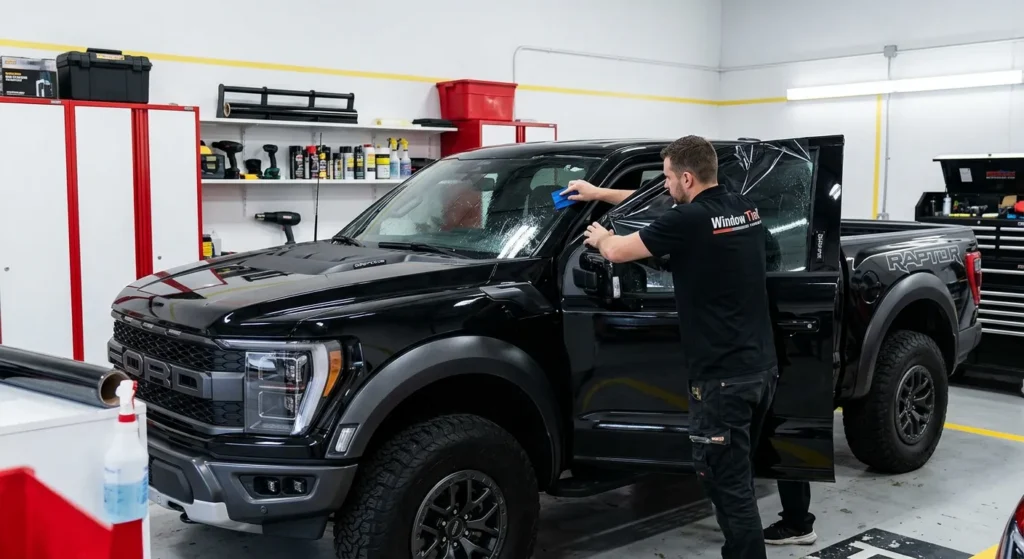
Auto Window Tinting in Aurora, CO involves applying automotive film to vehicle glass to change how much visible light, infrared energy, and UV radiation passes through the treated window.
Drivers may choose tint for several reasons:
Film choice changes the result.
A lower-priced carbon film can provide useful heat and UV protection.
A ceramic film can offer greater infrared rejection without relying on extremely dark glass.
That is why it helps to compare the film grade along with the VLT.
VLT stands for visible light transmittance.
It tells you how much visible light passes through the glass.
A higher VLT means more visible light passes through.
A lower VLT means the window looks darker.
A simple way to read the numbers is:
These examples explain the scale. They do not mean every percentage listed above is legal on every window in Colorado.
That depends on where the window sits and how the final glass-and-film combination measures.
Colorado Revised Statutes § 42-4-227 sets rules for window treatments on Colorado-registered vehicles.
The statute generally says windows other than the windshield must allow at least 27% light transmittance.
The windshield generally must allow at least 70% light transmittance.
Colorado also has an exception for windows behind the driver.
Rear windows may allow less than 27% light transmission when the front side windows and windshield each allow at least 70% light transmission.
That makes the law more detailed than simply saying “27% is legal.”
| Window | General Colorado Rule |
|---|---|
| Windshield | At least 70% light transmittance |
| Front side windows | At least 27% light transmittance under the standard rule |
| Rear side windows | At least 27% under the standard rule |
| Rear window | At least 27% under the standard rule |
| Rear windows below 27% | Allowed when front side windows and windshield each allow at least 70% |
| Metallic or mirrored appearance | Not allowed |
| Top windshield strip | Limited to the top four inches and subject to statutory conditions |
For Auto Window Tinting in Aurora, CO, ask how the complete vehicle setup fits the statute instead of choosing each window without looking at the rest.
Under Colorado’s standard rule, front side windows must allow at least 27% of visible light through.
The number printed on a film sample is not necessarily the number that will be measured after installation.
Your factory glass already affects light transmission.
Once tint is added, the final VLT can be lower than the film-only rating.
This becomes very relevant when you are choosing a film near the legal threshold.
Ask the installer about the finished result rather than saying:
“Just put 27% film on it.”
The better question is:
“What should the final VLT be after this film is installed on my factory glass?”
Colorado allows more flexibility behind the driver under a specific condition.
Windows behind the driver, including the rear window, may allow less than 27% light transmission when both the front side windows and windshield allow at least 70% light transmission.
That means a driver cannot automatically combine very dark rear windows with any front-window shade and assume the setup follows the statute.
Look at the vehicle as one system.
This can matter on:
If you want darker rear glass during an Auto Window Tinting in Aurora, CO appointment, discuss what you also plan to do with the front windows.
Colorado requires the windshield to allow at least 70% light transmission.
The statute also permits certain nontransparent material across the top of the windshield.
The lower edge of that material cannot extend more than four inches down from the top of the windshield.
Colorado law also restricts that top material from:
Windshield film deserves careful planning because both visibility and legal limits matter.
If heat rejection is the goal, ask about lighter high-IR-rejection films rather than assuming the windshield needs to look dark.
No.
Colorado Revised Statutes § 42-4-227 states that window material may not present a metallic or mirrored appearance.
This rule is separate from VLT.
A tint can meet a darkness threshold and still create a legal problem if it has a prohibited metallic or mirrored appearance.
Ceramic Pro’s current automotive window films use carbon and ceramic construction rather than a mirrored metal appearance.
The non-metal construction also helps the films remain friendly to common electronic signals.
Vehicle windows already block some visible light before tint is applied.
That means film VLT and final VLT are not the same thing.
If factory glass transmits less than 100% of visible light and you add window film, the finished glass can measure darker than the film number alone suggests.
This matters when choosing Auto Window Tinting in Aurora, CO near Colorado’s legal threshold.
Do not shop by the number on a film roll alone.
A trained installer should consider:
That gives you a clearer picture of the finished setup.
Window darkness deals with visible light.
Heat rejection deals with solar energy.
Infrared radiation is one part of sunlight that contributes to the heat you feel.
Ceramic window films are made to reject more of that infrared energy before it enters the cabin.
That is why Ceramic Pro publishes infrared-rejection figures separately from VLT.
For Auto Window Tinting in Aurora, CO, pay attention to both.
A film can be lighter and still reject a high percentage of infrared energy.
Not always.
Darkness tells you about visible light.
It does not tell you the full story about infrared heat rejection.
A lighter ceramic film can outperform a darker lower-grade film in infrared rejection.
This can be useful if you:
The film type may matter more than simply choosing the darkest shade available.
Ceramic Pro Carbon X uses nanocarbon particles and IR-blocking materials.
Ceramic Pro Denver currently lists Carbon X with:
Carbon X can fit drivers who want heat reduction and UV protection without moving into Ceramic Pro’s higher IR film tiers.
It also gives drivers a darker appearance without using metallic film.
Ceramic Pro Ceramic X uses ceramic nano-film construction.
Ceramic Pro Denver positions Ceramic X above Carbon X for drivers who want stronger heat control with a rich black tone.
It can make sense when you want:
Ceramic X is worth comparing if you want ceramic film but do not need Ceramic Pro’s highest infrared-rejection tier.
Ceramic Pro Ceramic IR uses nano-ceramic technology with an infrared-focused layer.
Ceramic Pro Denver states that Ceramic IR can block up to 96% of infrared heat.
It also blocks more than 99% of damaging UV radiation according to the current service material.
Ceramic IR may fit Aurora, CO drivers who care about:
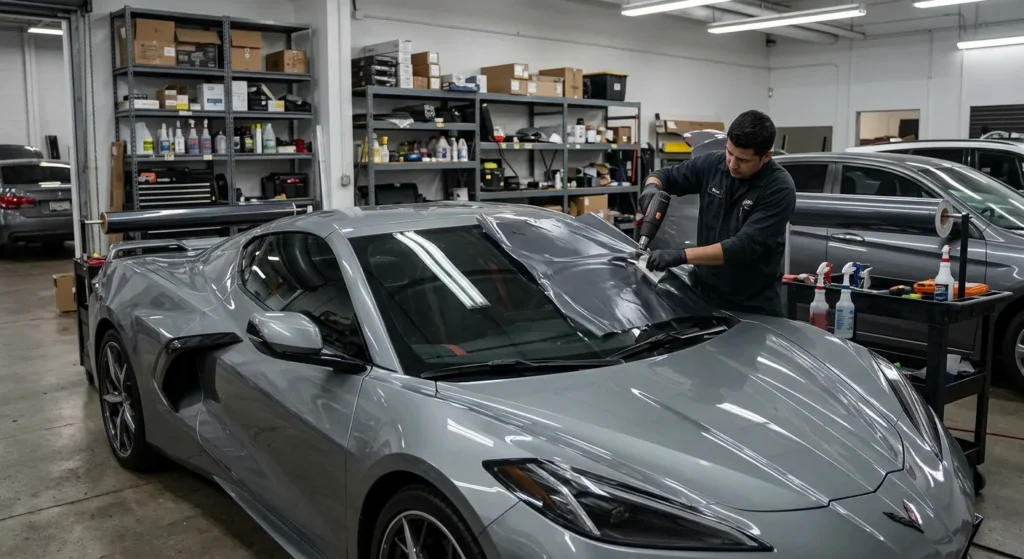
For Auto Window Tinting in Aurora, CO, Ceramic IR is a strong comparison point when heat rejection matters more than simply making the glass dark.
Ceramic Pro Ultimate IR is Ceramic Pro Denver’s highest listed infrared-rejection film.
Ceramic Pro states that Ultimate IR can block up to 99% of infrared radiation.
Ceramic Pro Denver also states that an 80% VLT Ultimate IR film can provide up to 95% IR blocking.
That film has a nearly transparent appearance.
This is a clear example of why dark glass and heat control are not the same thing.
Ultimate IR can fit drivers who want:
Here is a simple comparison of Ceramic Pro Denver’s current film choices:
| Film | Construction | Published Heat Information | UV Blocking | Good Fit For |
|---|---|---|---|---|
| Carbon X | Nanocarbon | 74% film-only IR blocking | 99%+ | Heat reduction, darker look, carbon film |
| Ceramic X | Ceramic nano-film | Stronger heat focus than entry carbon film | High UV protection | Ceramic construction and dark factory-style appearance |
| Ceramic IR | Nano-ceramic with IR layer | Up to 96% IR heat rejection | 99%+ | Drivers focused on stronger heat reduction |
| Ultimate IR | Nano-ceramic | Up to 99% IR rejection | 99%+ | Drivers seeking Ceramic Pro’s highest listed IR control |
Published performance can vary by shade and test method.
Ask which numbers apply to the exact film you are considering.
Aurora, CO drivers can spend plenty of time in direct sun during commuting, shopping, airport trips, school runs, and daily travel.
A vehicle parked outdoors can collect solar heat through its glass.
The amount of cabin heat depends on several factors:
Heat-rejecting film reduces some of the solar energy entering through treated glass.
It does not mean the cabin will remain cool after sitting in direct sun.
It can reduce the solar heat load compared with untreated glass.
Yes.
This is one of the strongest reasons to compare ceramic films.
Ceramic Pro Denver states that Ultimate IR can achieve up to 95% IR blocking in an 80% VLT film.
That means you can choose a much lighter appearance while still getting strong infrared rejection.
Lighter high-IR film may appeal to drivers who:
With Auto Window Tinting in Aurora, CO, ask to compare lighter and darker films within the same product family.
Ceramic Pro Denver lists more than 99% UV blocking for several of its current films, including Carbon X, Ceramic IR, and Ultimate IR.
UV blocking is different from infrared rejection.
It is also different from visible light transmission.
That means a light-looking film can still block a very high percentage of UV radiation.
UV-blocking film can reduce the amount of UV reaching passengers and interior materials through treated glass.
This can be useful for vehicles that spend many hours outside.
Reducing UV exposure can help limit one source of interior fading and material aging.
Vehicle interiors can contain:
Window tint cannot promise that these materials will never fade or age.
Time, heat, sunlight, cleaning products, storage, and use all affect them.
Blocking much of the UV passing through treated glass can still form part of a long-term interior-care plan.
Tesla owners can use the same film comparisons when choosing tint.
Ceramic Pro Denver provides dedicated Tesla Window Tinting for owners who want heat rejection, glare reduction, UV blocking, or a more uniform glass appearance.
Tesla owners can also ask about:
If heat is your biggest concern, compare Ceramic IR and Ultimate IR before choosing only by darkness.
Before booking Auto Window Tinting in Aurora, CO, ask:
Those answers give you more useful information than choosing tint only from a shade chart.
Ceramic Pro Denver serves Aurora, CO with Ceramic Pro automotive window tint.
Our current film lineup includes:
Ceramic Pro Denver has served Colorado drivers for 21 years and is the Ceramic Pro Elite Dealer for the Denver metro area.
We also provide:
Ceramic Pro Denver
6333 South Racine Cir
Centennial, CO 80111
Phone: (303) 875-4356
Hours:
Monday-Friday: 8:30 AM-6:30 PM
Saturday: 9:00 AM-4:00 PM
If you are considering Auto Window Tinting in Aurora, CO, call (303) 875-4356 or schedule an appointment.
Tell us your vehicle, current glass, desired appearance, and whether heat rejection, privacy, glare control, or lighter visibility matters most to you.
Colorado Revised Statutes § 42-4-227 generally requires windows other than the windshield to allow at least 27% visible light transmission. The windshield generally must allow at least 70%. Rear windows can go below 27% when the front side windows and windshield each allow at least 70%.
Colorado requires the windshield to allow at least 70% light transmission. The statute also allows certain material across the top four inches of the windshield when it meets the state’s color, vision, and glare restrictions.
No. Colorado law says window material may not present a metallic or mirrored appearance.
Ceramic Pro Denver currently lists Ultimate IR as its highest IR-rejection film at up to 99% infrared rejection. Ceramic IR is listed at up to 96%.
No. VLT measures visible light, while infrared rejection measures another part of solar energy. A lighter high-grade ceramic film can reject more infrared heat than a darker lower-tier film.
Yes. Several Ceramic Pro films are listed with more than 99% UV blocking. UV performance does not require extremely dark glass.
Ceramic Pro Denver serves Aurora, CO from 6333 South Racine Cir, Centennial, CO 80111. Call (303) 875-4356 or visit ceramicprodenverelite.com/contact-us to schedule an appointment.
Contact Ceramic Pro Denver to schedule a consultation for paint protection film, ceramic coating, window tint, or paint correction. Our team responds quickly with clear options matched to your vehicle, budget, and timeline. You can call us at (303) 875-4356 or visit us at 6333 South Racine Cir, Centennial, CO 80111 for in person guidance.
Explore the many services we offer by clicking the boxes below