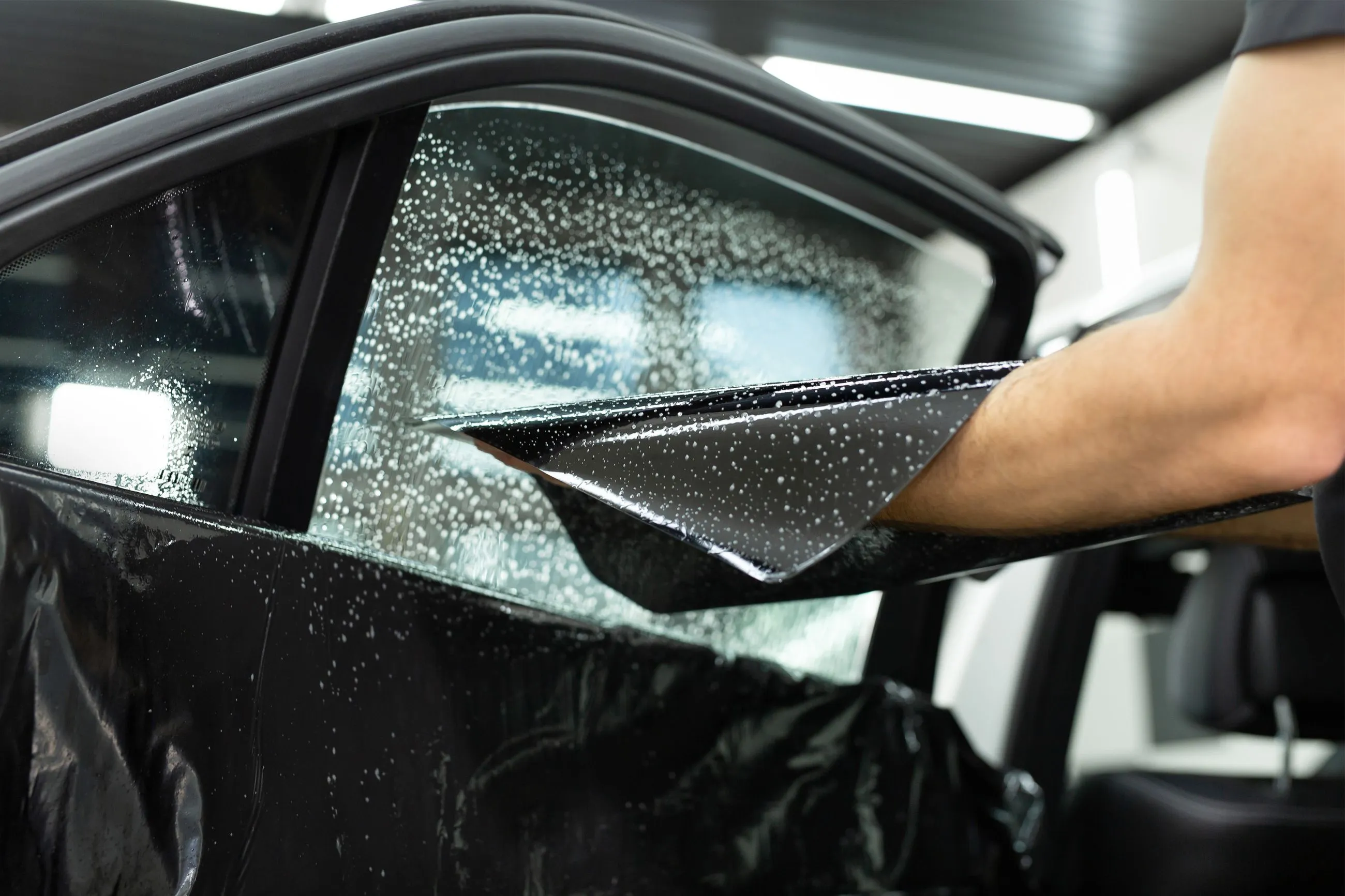

Auto Window Tinting in Parker, CO can make a vehicle more comfortable in strong Colorado sun, reduce glare, block UV exposure, add privacy, and change the way the glass looks. Before choosing a tint shade, you also need to know how Colorado measures legal window darkness and how one window film differs from another.
The percentage printed on a window-film sample is only one part of the decision.
Colorado law uses visible light transmittance, usually called VLT. Film construction matters too. A dark film does not automatically reject more heat than a lighter ceramic film. Two films with a similar visible shade can perform very differently when it comes to infrared heat, UV protection, glare, and signal compatibility.
Ceramic Pro Denver provides Window Tint for drivers from Parker, CO, Denver, CO, Centennial, CO, and nearby communities. Our Ceramic Pro film lineup includes Carbon X, Ceramic X, Ceramic IR, and Ultimate IR.
Our shop is located at 6333 South Racine Cir, Centennial, CO 80111.
Call (303) 875-4356 or contact Ceramic Pro Denver to compare legal shade choices and Ceramic Pro window films for your vehicle.
Colorado tint law can change. The legal information below is based on Colorado Revised Statutes § 42-4-227 as published in the 2025 Colorado Revised Statutes. Vehicle owners should confirm current requirements before installation.
Auto Window Tinting in Parker, CO involves installing window film on automotive glass to change visible light transmission and provide benefits based on the film’s construction.
Drivers commonly look at tint for:
The shade you choose affects how much visible light passes through the window.
Film construction affects much more.
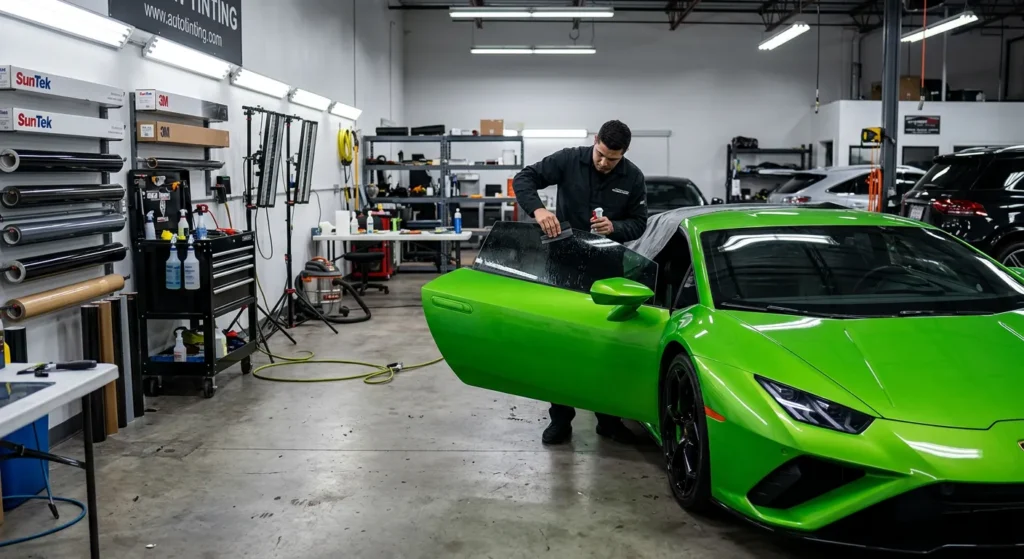
Ceramic Pro’s current automotive window-film lineup includes carbon and ceramic films with different heat-rejection capabilities. This gives Parker, CO drivers a way to compare both shade and film type rather than choosing tint only by how dark it looks.
VLT stands for visible light transmittance.
The percentage tells you how much visible light passes through the glass and film.
A higher VLT means more visible light passes through.
A lower VLT means less visible light passes through, so the window appears darker.
Think about it this way:
This becomes very important when discussing Auto Window Tinting in Parker, CO because Colorado law sets minimum light-transmission requirements.
The number printed on a film sample is not always the final VLT after installation.
Factory automotive glass already affects visible light. Once tint is placed on that glass, the final measured VLT can be lower than the film’s listed film-only number.
Ceramic Pro’s published specification sheet shows this difference. Its film-only VLT figures and VLT figures when applied to automotive glass do not always match.
That is why a professional installer should consider the existing glass before choosing a shade intended to remain within Colorado law.
Colorado Revised Statutes § 42-4-227 covers window visibility and window treatments.
For a motor vehicle registered in Colorado, the statute generally requires windows other than the windshield to allow at least 27% light transmittance.
The windshield must allow at least 70% light transmittance.
There is also a rear-window exception.
Windows behind the driver, including the rear window, may have less than 27% light transmission if the vehicle’s front side windows and windshield each allow at least 70% light transmission.
That means Colorado’s rule is not as simple as saying, “27% is legal everywhere except the windshield.”
The relationship between the front and rear windows matters.
| Window Area | Colorado Rule for Colorado-Registered Vehicles |
|---|---|
| Windshield | At least 70% light transmittance, subject to the top-strip rule |
| Front side windows | Generally at least 27% VLT |
| Rear side windows | Generally at least 27% VLT |
| Rear window | Generally at least 27% VLT |
| Rear windows darker than 27% | Allowed when front side windows and windshield allow at least 70% VLT |
| Metallic or mirrored appearance | Prohibited |
| Top windshield strip | May extend no more than four inches down from the top and must meet the statute’s other conditions |
Those rules should guide any discussion about Auto Window Tinting in Parker, CO.
For most Colorado-registered vehicles following the standard setup, front side windows must allow at least 27% visible light transmission.
Be careful when choosing film based only on a sample marked “30%” or another shade near the legal threshold.
The glass itself can reduce light transmission before the film is installed.
Once film and glass are measured together, the result may differ from the film-only rating.
Here’s what matters: if staying within the legal limit is your goal, discuss the final expected VLT on your glass, not just the shade printed on the box.
Ceramic Pro Denver can walk Parker, CO drivers through film choices before installation.
Colorado gives drivers two routes for windows behind the driver.
The standard rule requires at least 27% light transmission through windows other than the windshield.
Colorado law then allows windows behind the driver, including the rear window, to go below 27% when the front side windows and windshield allow at least 70% light transmission.
This can matter for SUVs, trucks, crossovers, and vehicles that already have darker factory rear glass.
If you want Auto Window Tinting in Parker, CO with darker rear glass, do not assume that you can combine any front tint shade with any rear tint shade.
Ask how the complete configuration fits Colorado law.
Colorado law requires the windshield to allow at least 70% light transmission.
The statute also permits nontransparent material across the top portion of the windshield when several conditions are met.
The bottom edge of that material cannot extend more than four inches down from the top of the windshield.
The statute says the material cannot:
Windshield tint deserves extra care because visibility and state law both come into play.
When asking about windshield film during an Auto Window Tinting in Parker, CO appointment, discuss the exact film VLT, the glass, and the final configuration.
Colorado Revised Statutes § 42-4-227 says no material used on a motor vehicle window may present a metallic or mirrored appearance.
That makes appearance another part of the legal discussion.
The darkness of the tint is not the only concern.
Ceramic Pro’s current window films use carbon and ceramic construction rather than relying on a mirrored metal appearance.
Ceramic Pro also states that its window films are made to avoid interference with common vehicle and mobile signals.
That can matter in newer vehicles that rely on:
This is one of the easiest parts of tint shopping to miss.
Suppose you pick a film based only on its film-only VLT rating.
Your vehicle glass is not perfectly transparent before tint goes on it. When film is applied to the glass, the resulting measured light transmission can change.
Ceramic Pro’s Ultimate IR specification sheet shows this directly.
One listed Ultimate IR film has a film-only VLT of 30%, while Ceramic Pro reports a lower VLT when that film is applied to its test automotive glass.
This is why someone shopping for Auto Window Tinting in Parker, CO should not try to hit Colorado’s legal threshold by guessing from the roll’s shade number.
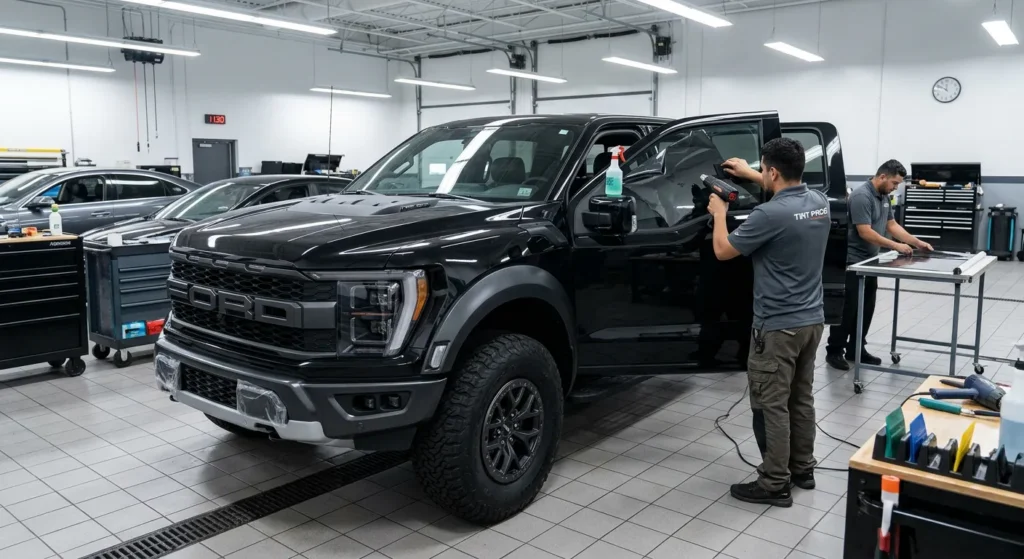
Talk to the installer about the finished glass.
No.
Window darkness and heat rejection are related to different measurements.
A darker window blocks more visible light, but film construction can allow a lighter ceramic film to reject a large amount of infrared heat without creating the appearance of very dark glass.
This matters for Parker, CO drivers who care more about cabin heat than privacy.
You may not need the darkest possible legal shade to improve comfort.
Ceramic Pro divides its current automotive tint lineup into four levels:
The films differ in construction, shade choices, and heat performance.
Ceramic Pro Carbon X uses carbon-based construction.
Ceramic Pro describes Carbon X as a non-metal carbon film made with nanocarbon particles and infrared-blocking materials.
The manufacturer states that Carbon X blocks more than 99% of UV rays and provides up to 74% film-only infrared blocking under its stated testing method.
Carbon construction also avoids the signal concerns commonly associated with metal-based films.
Carbon X can be a good place to start for drivers who want:
When comparing Auto Window Tinting in Parker, CO, Carbon X gives you a different film construction than Ceramic Pro’s ceramic choices.
Ceramic Pro Ceramic X moves into a ceramic and carbon film construction.
Ceramic Pro describes Ceramic X as using ceramic particles to reject more infrared heat than traditional dyed or carbon films.
The film is also designed with a rich black appearance that can work well beside factory automotive glass.
Ceramic Pro’s current lineup comparison lists Ceramic X above Carbon X in its heat-performance scale.
Ceramic X may suit Parker, CO drivers who want more heat control while keeping a clean dark appearance.
Ceramic Pro Ceramic IR uses ceramic construction with an infrared-focused layer.
Ceramic Pro Denver states that Ceramic IR can block up to 96% of infrared heat based on the manufacturer’s stated testing.
This is where the difference between shade and film performance becomes easy to see.
A person seeking Auto Window Tinting in Parker, CO may choose Ceramic IR because heat control matters more than simply making the windows dark.
Ceramic film can provide strong infrared rejection across several shade choices.
That gives drivers more room to balance:
Ceramic Pro Ultimate IR sits at the top of Ceramic Pro’s current window-film lineup.
Ceramic Pro says Ultimate IR uses nano-ceramic construction and can block up to 99% of infrared heat under its stated testing conditions.
It also blocks more than 99% of UV radiation according to Ceramic Pro’s published material.
One useful feature of high-IR-rejection ceramic film is that strong heat control is available in lighter VLT choices.
Ceramic Pro’s published Ultimate IR specification sheet includes several VLT levels, including lighter films intended for drivers who want more visible light while still receiving infrared rejection.
For Auto Window Tinting in Parker, CO, that can be useful when legal VLT and cabin heat are both high on your list.
Ceramic Pro’s current product lineup places its four main automotive films in this order:
| Film | Construction | Manufacturer-Listed Max Heat Rejection | UV Protection | Warranty Listed by Ceramic Pro |
|---|---|---|---|---|
| Carbon X | Carbon | Up to 95% | 99% | Lifetime |
| Ceramic X | Ceramic + Carbon | Up to 96% | 99% | Lifetime |
| Ceramic IR | Ceramic | Up to 97% | 99% | Lifetime |
| Ultimate IR | Ceramic | Up to 99% | 99% | Lifetime |
The figures above come from Ceramic Pro’s current window-tint lineup comparison. Manufacturer testing methods matter when comparing heat numbers, so do not assume that every film company measures heat performance the same way.
Film selection should come down to the features you care about.
If you mainly want a darker look and solid sun protection, one film may fit.
If cabin heat is your main concern, a higher-performing ceramic film may make more sense.
Think about where your vehicle spends its time.
Do you park outside during the day?
Do you commute between Parker, CO and Denver, CO?
Does your car sit in an uncovered parking lot?
Do you want privacy or are you mostly concerned with heat?
Do you prefer a lighter window appearance?
Do you want your front windows to look closer to factory rear privacy glass?
These answers can point you toward the right film.
The real question is what you want the film to do.
Ceramic Pro Denver can show Parker, CO drivers film samples and discuss VLT before installation.
Yes.
This is one of the main reasons ceramic films have become popular.
You do not have to make the glass extremely dark to reduce infrared heat.
Ceramic Pro’s Ultimate IR specification sheet lists lighter VLT films that still post high infrared-rejection figures under its test methods.
This can be useful when:
With Auto Window Tinting in Parker, CO, film performance and shade should be treated as two separate choices.
Tesla owners can also choose tint based on legal VLT, heat performance, appearance, and film construction.
Ceramic Pro Denver provides dedicated Tesla Window Tinting for Tesla owners from Parker, CO and surrounding communities.
We also provide:
Large glass areas can make heat rejection a major concern for EV owners.
Ask our team which Ceramic Pro film fits your Tesla, desired shade, and Colorado VLT requirements.
Before booking Auto Window Tinting in Parker, CO, ask the installer:
Those questions help you compare film by more than darkness.
If you are considering Auto Window Tinting in Parker, CO, Ceramic Pro Denver can help you compare legal shade choices with Carbon X, Ceramic X, Ceramic IR, and Ultimate IR.
Ceramic Pro Denver is a Ceramic Pro Elite Dealer serving the Denver metro area. Our team has worked in Colorado’s automotive restyling field for 21 years.
Along with Window Tint, we provide:
Our shop serves drivers from Parker, CO, Denver, CO, Centennial, CO, and nearby areas.
Ceramic Pro Denver
6333 South Racine Cir
Centennial, CO 80111
Phone: (303) 875-4356
Hours:
Monday-Friday: 8:30 AM-6:30 PM
Saturday: 9:00 AM-4:00 PM
Call (303) 875-4356 or schedule an appointment to compare window-film grades and shade choices for your vehicle.
For Colorado-registered vehicles, Colorado Revised Statutes § 42-4-227 generally requires windows other than the windshield to allow at least 27% visible light transmission. The windshield must allow at least 70%. Windows behind the driver may go below 27% when the front side windows and windshield each allow at least 70% light transmission.
Colorado law requires at least 70% light transmission through the windshield. The law also allows nontransparent material across the top of the windshield when it extends no more than four inches down and meets the statute’s restrictions on color, vision, and reflection.
No. Colorado Revised Statutes § 42-4-227 says window material cannot present a metallic or mirrored appearance.
Film construction affects heat performance. Ceramic Pro’s current lineup places Ceramic X, Ceramic IR, and Ultimate IR above Carbon X in its listed heat-rejection scale. Ultimate IR has Ceramic Pro’s highest listed heat performance, reaching up to 99% infrared rejection under its stated testing.
Not always. A lower VLT creates a darker visible appearance, while heat rejection depends heavily on film construction. A lighter ceramic film can provide strong infrared rejection without producing an extremely dark window.
Ceramic Pro Denver currently provides Carbon X, Ceramic X, Ceramic IR, and Ultimate IR. Each film has different construction and heat-performance characteristics.
Ceramic Pro Denver provides Auto Window Tinting in Parker, CO for drivers visiting our shop at 6333 South Racine Cir, Centennial, CO 80111. Call (303) 875-4356 or visit ceramicprodenverelite.com/contact-us to schedule an appointment.
Contact Ceramic Pro Denver to schedule a consultation for paint protection film, ceramic coating, window tint, or paint correction. Our team responds quickly with clear options matched to your vehicle, budget, and timeline. You can call us at (303) 875-4356 or visit us at 6333 South Racine Cir, Centennial, CO 80111 for in person guidance.
Explore the many services we offer by clicking the boxes below