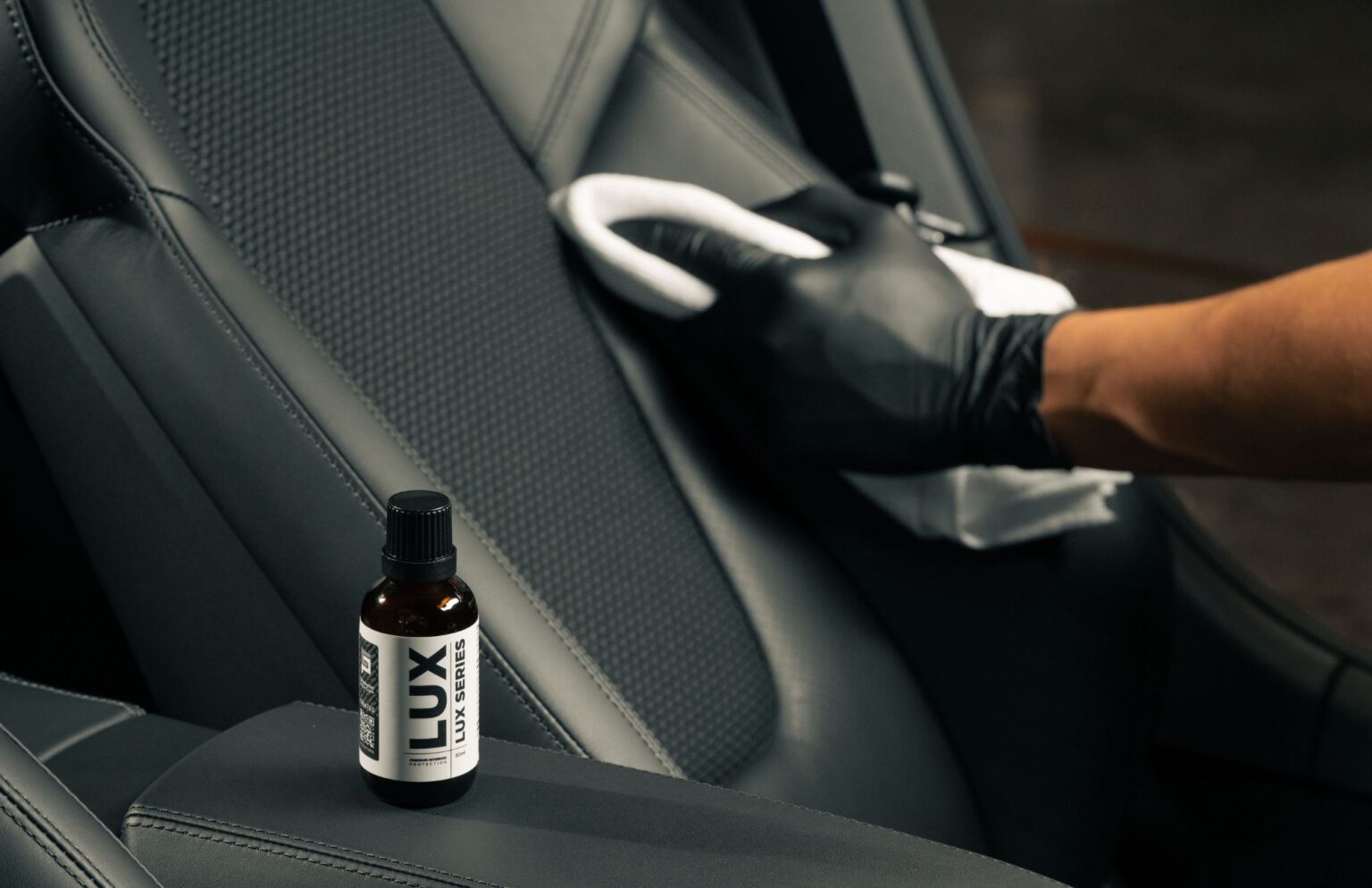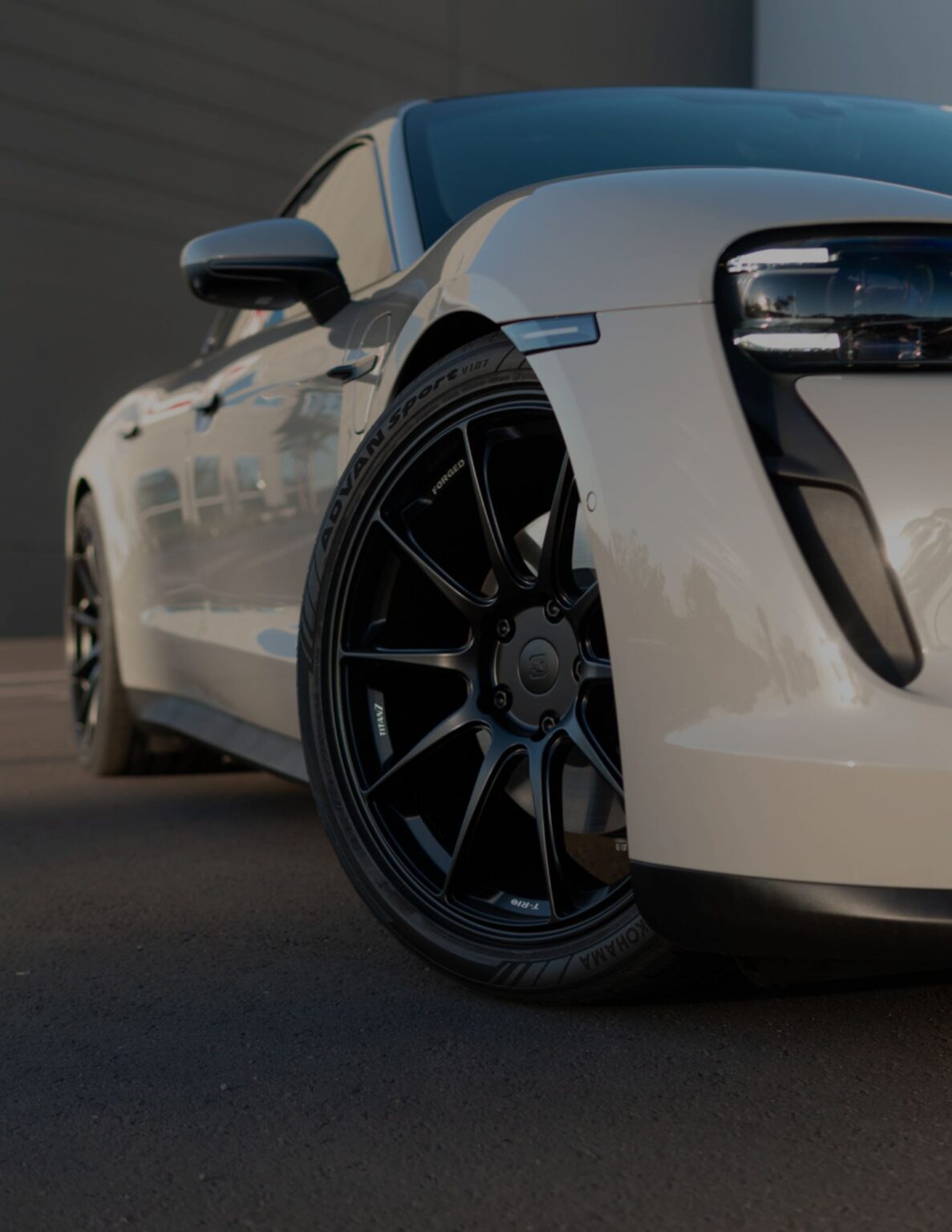

Ceramic Coating vs. PPF for Denver’s Hail and Road Salt is a common question for drivers who want to protect their paint before Colorado weather and road debris take a toll. Denver, CO and Centennial, CO vehicles deal with sun, dust, winter road film, gravel, bugs, mountain roads, and hail season. The right choice depends on what kind of damage you want to reduce.
At Ceramic Pro Denver, we help drivers compare ceramic coating, paint protection film, window tint, Color PPF, and paint correction. Our shop is located at 6333 South Racine Cir, Centennial, CO 80111. We have served Colorado drivers for 21 years and are the Elite Dealer for Ceramic Pro in the Denver Metro Area.
The short answer is this: ceramic coating is better for gloss, slickness, water beading, chemical resistance, and easier washing. PPF is better for rock chips, road debris, and abrasion. For hail, neither one should be treated as dent protection. If hail is large enough to dent metal, it can still damage a vehicle with coating or PPF.
Ceramic Coating vs. PPF for Denver’s Hail and Road Salt comes down to the type of protection you need. Ceramic coating helps keep the vehicle easier to wash after snow film, deicers, dust, and road grime. PPF gives a thicker barrier for panels that take hits from rocks, gravel, and road debris.
Here is the simple version:
NOAA’s National Severe Storms Laboratory states that hail can cause property damage, and Denver Metro drivers know that hail can arrive fast during spring and summer storms. A coating or film may help with surface-level marks in some cases, but large hail can still dent panels, crack glass, and damage trim.
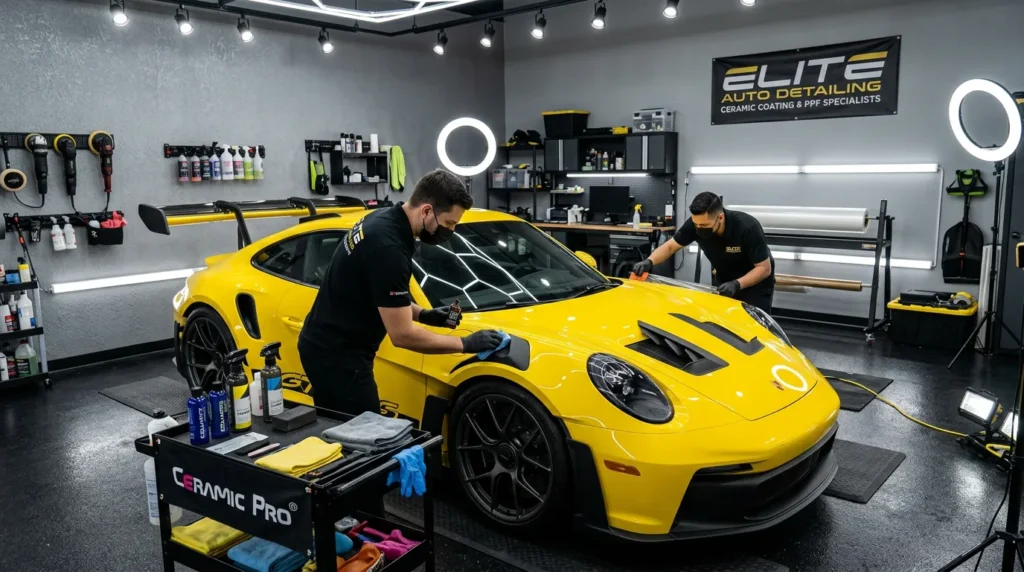
Bottom line, ceramic coating and PPF are paint protection tools. Covered parking, storm awareness, and fast shelter are still the better hail plan.
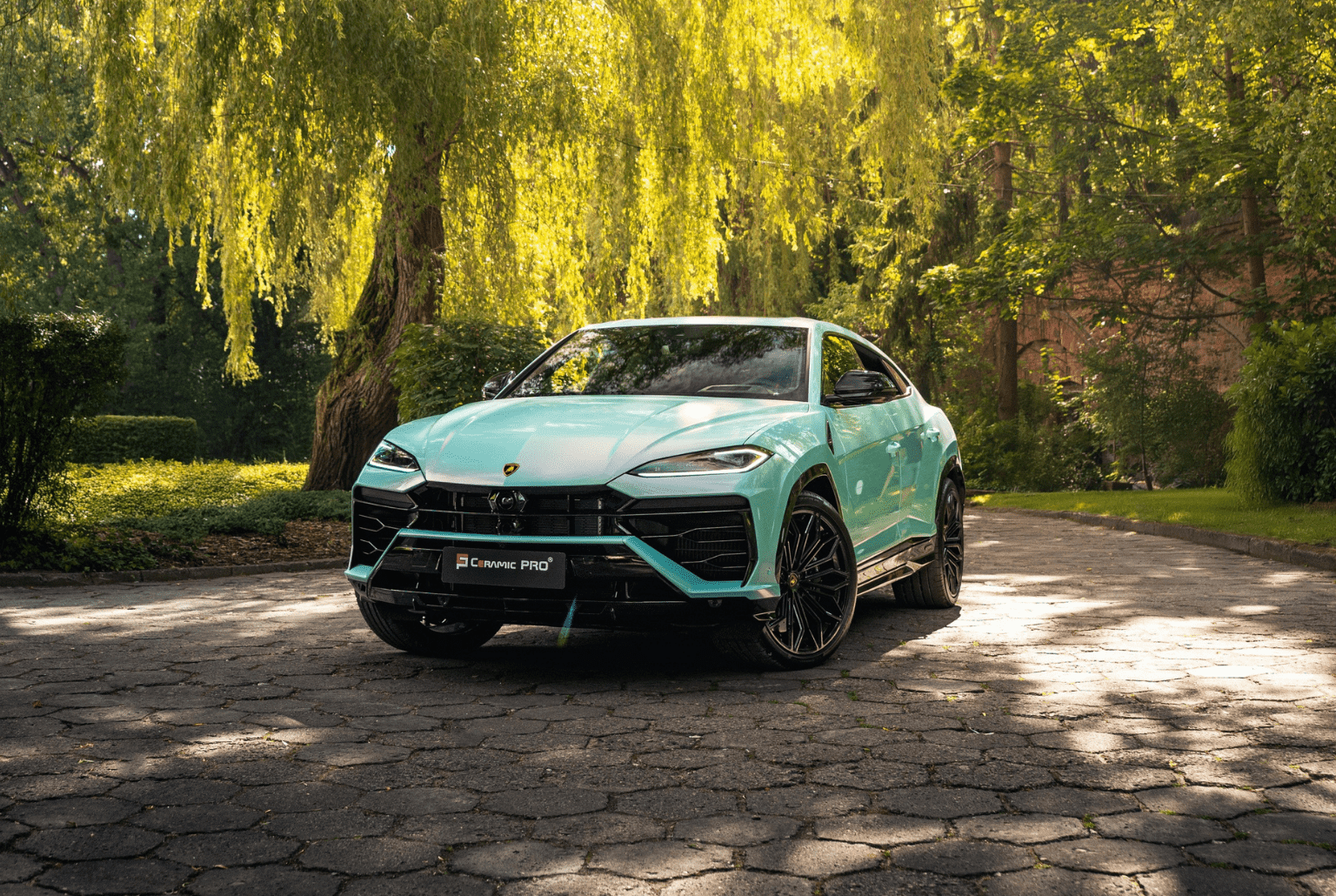
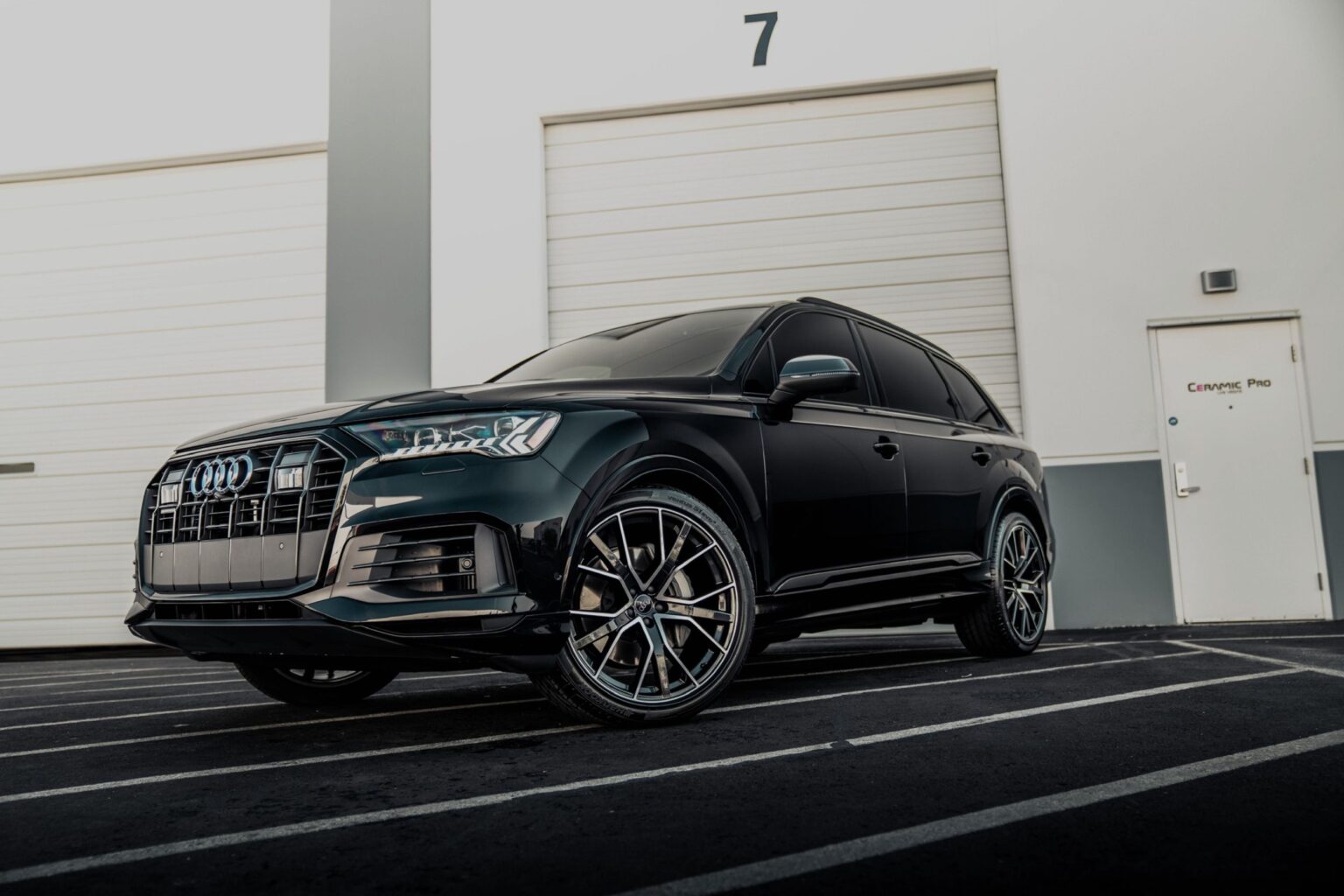
Ceramic Coating vs. PPF for Denver’s Hail and Road Salt starts with understanding ceramic coating. A ceramic coating is a liquid-applied product installed over clean, prepped paint. Once cured, it bonds to the surface and creates a slick protective layer.
Ceramic Pro describes its ceramic coating systems as high-gloss, hydrophobic coatings made to help protect surfaces from harsh environmental elements. You can read more from Ceramic Pro Coatings.
Ceramic coating can help with:
Here’s what matters. Denver winter grime can cling to unprotected paint. Ceramic coating helps reduce how strongly grime bonds to the surface, so a safe wash can remove buildup more easily.
Ceramic coating is a strong choice for drivers who want their vehicle to look cleaner between washes and feel slick after washing. It is also a smart option after paint correction because it helps protect the corrected finish.
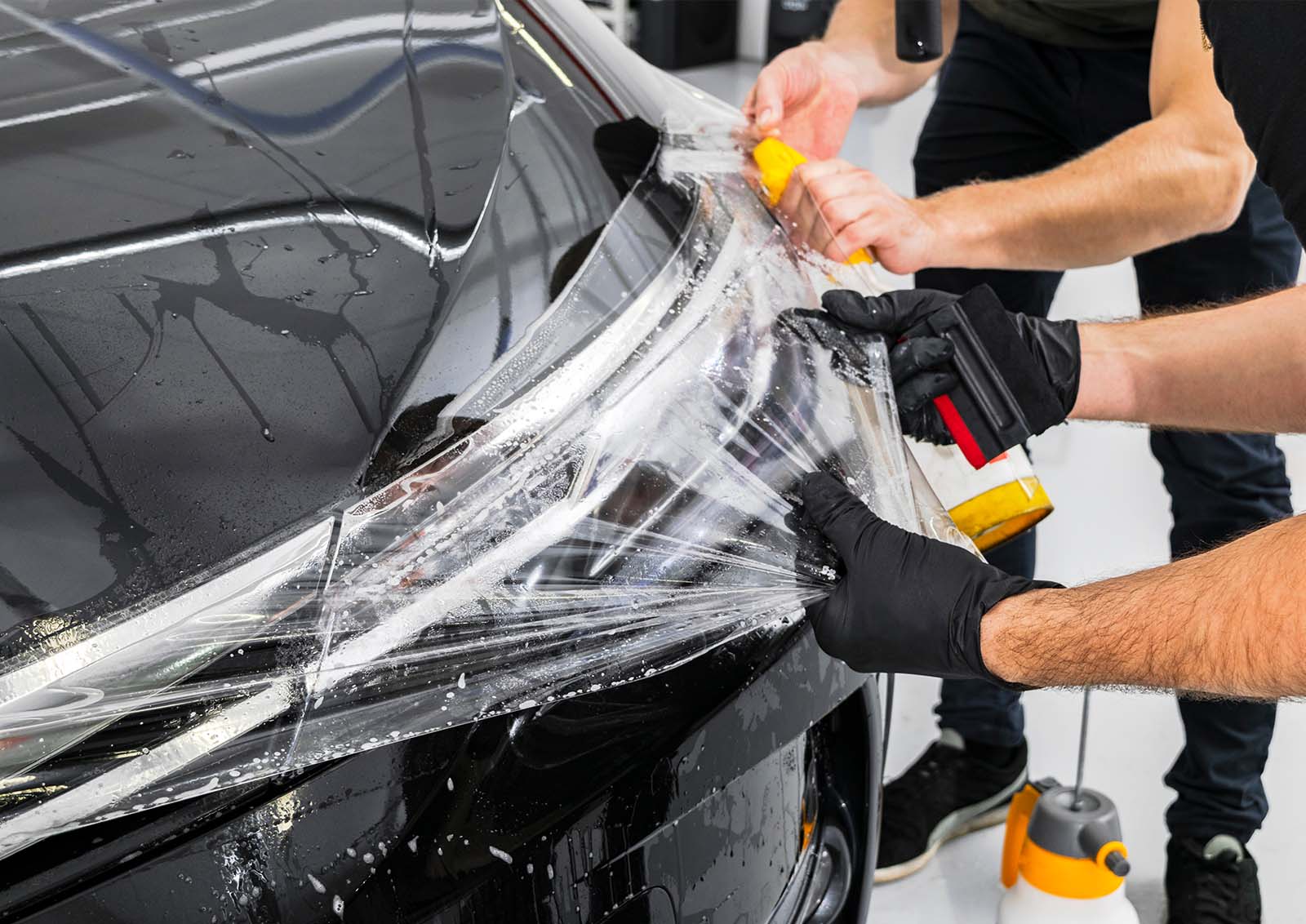
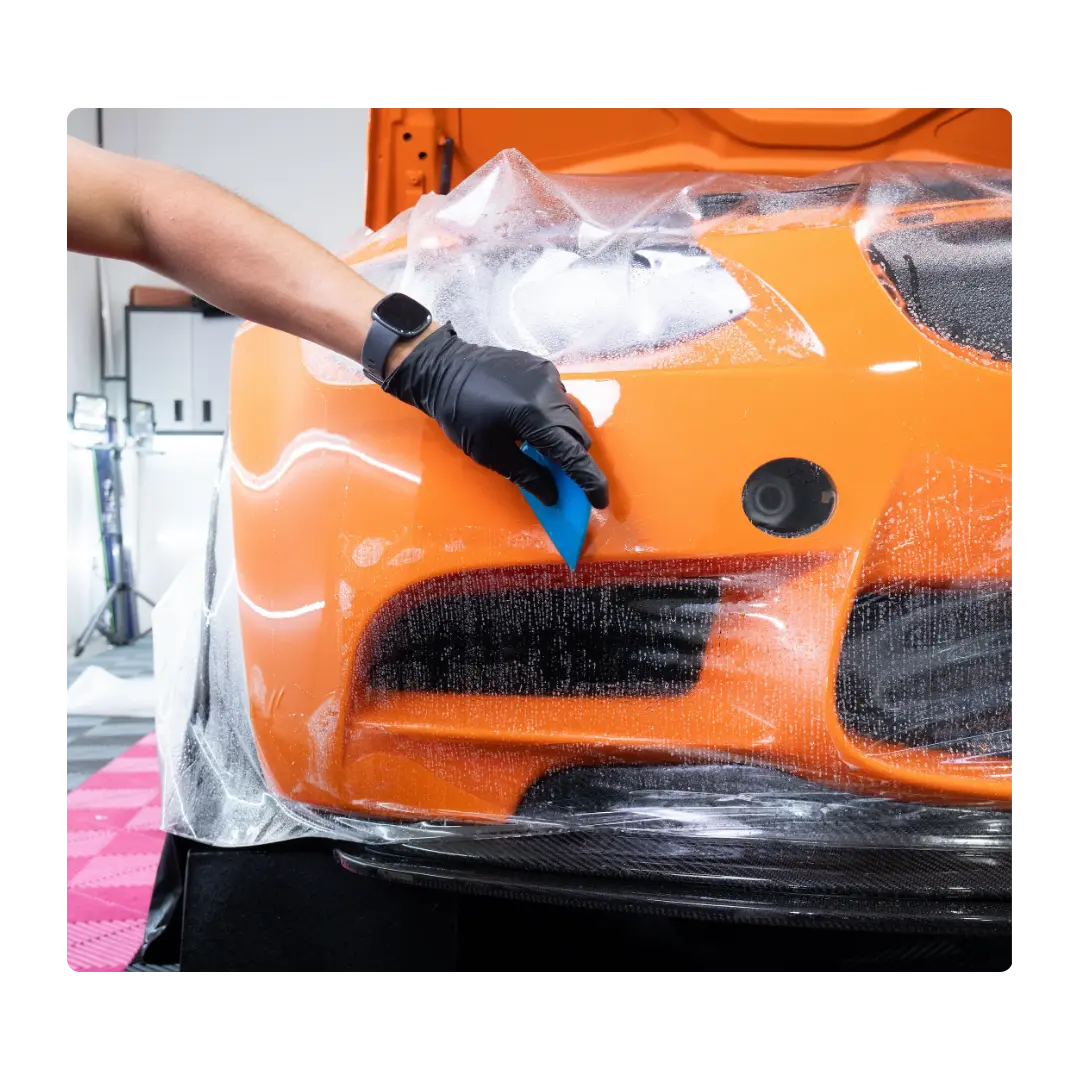
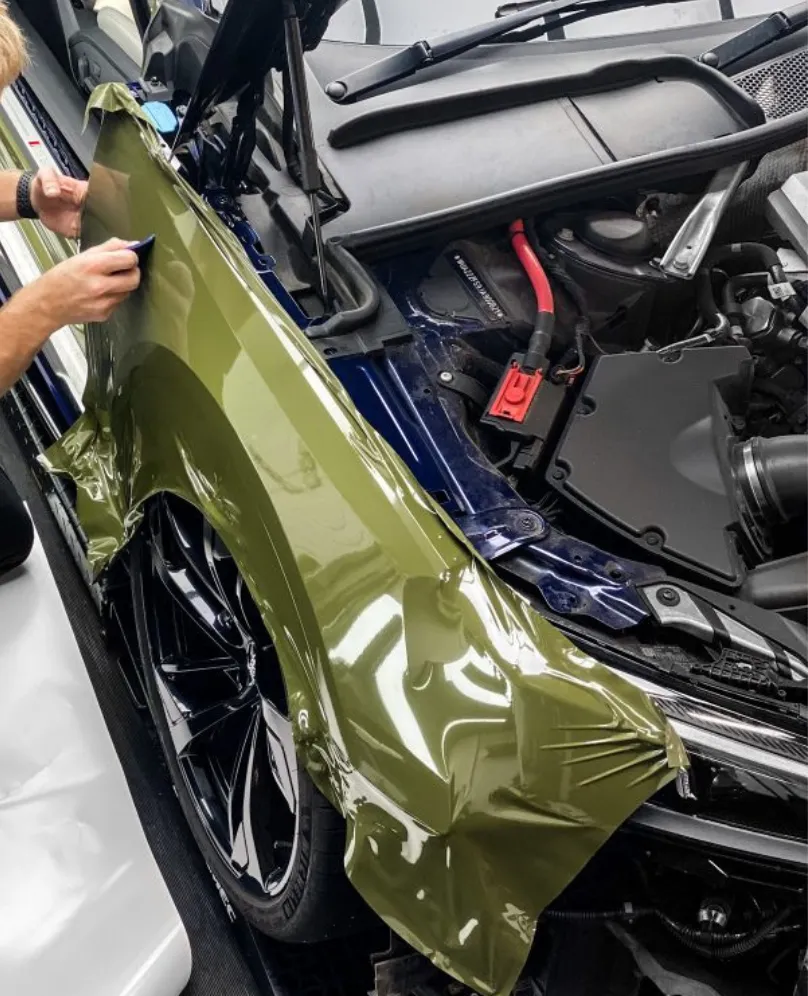
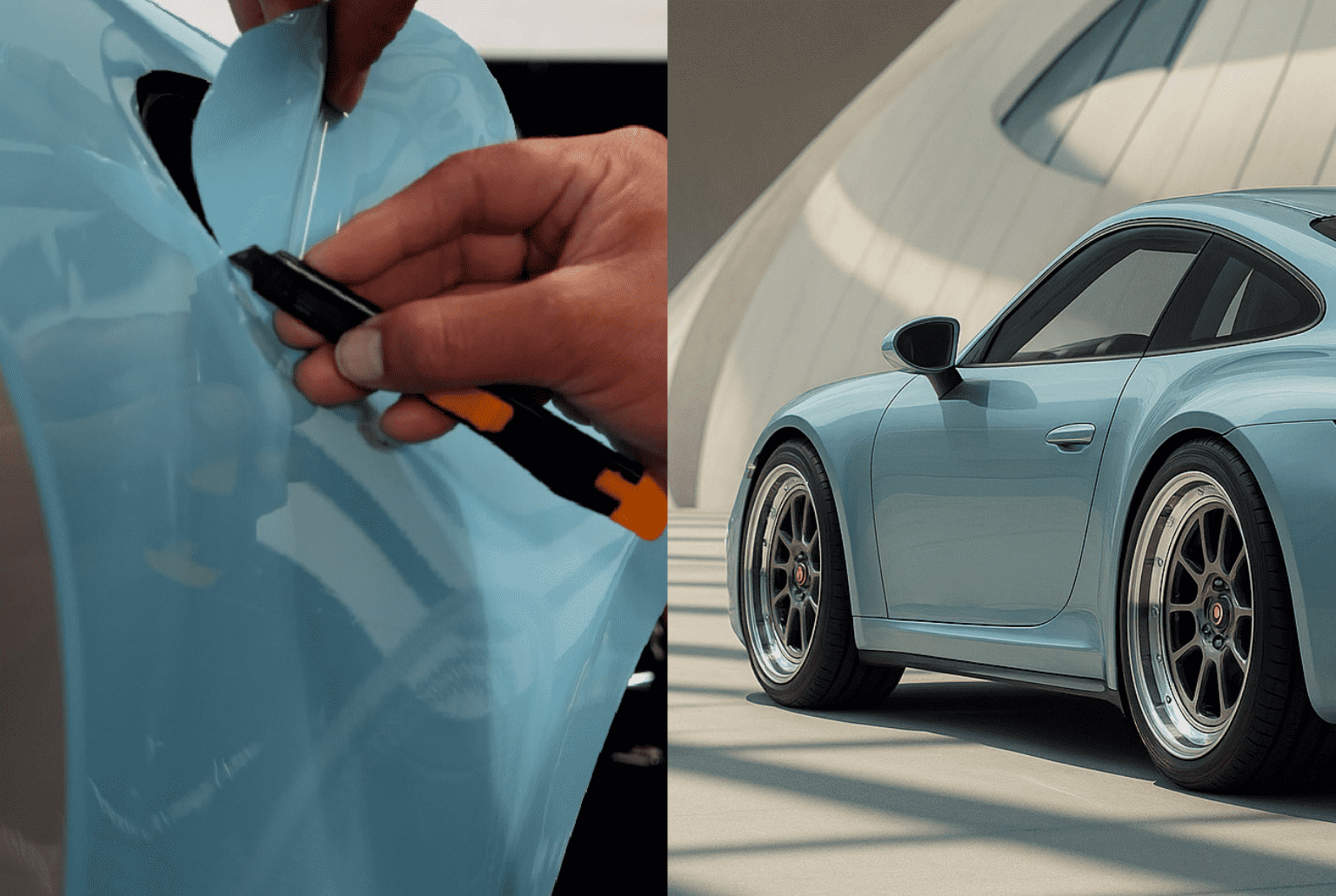
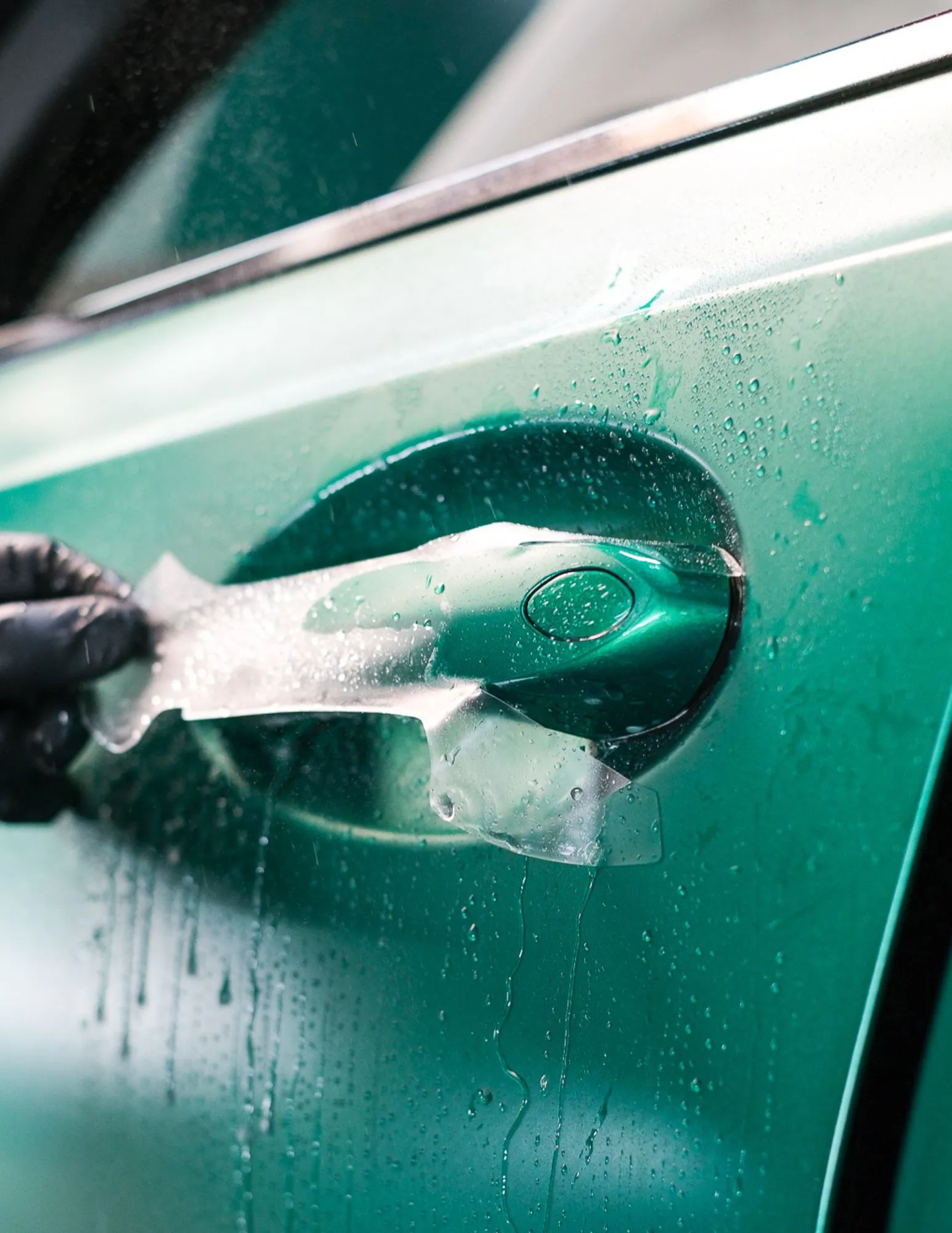
Ceramic Coating vs. PPF for Denver’s Hail and Road Salt changes when physical impact is the concern. Paint protection film, also called PPF, is a clear or colored urethane film installed over painted panels.
PPF helps defend paint from:
Ceramic Pro describes its paint protection film as protection from rock chips, road debris, and scratches. You can learn more through Ceramic Pro Paint Protection Film.
For Denver, CO and Centennial, CO drivers, PPF is often the better first choice for the front bumper, hood, fenders, mirrors, rocker panels, and lower doors. These areas see the most abuse on I-25, I-70, C-470, E-470, US 36, Parker Road, Santa Fe Drive, and mountain routes.
Ceramic Coating vs. PPF for Denver’s Hail and Road Salt gets tricky when hail enters the conversation. Ceramic coating should not be sold as hail protection. It is not thick enough to absorb hail impact or stop metal dents.
Ceramic coating may help the paint resist some surface contaminants after a storm, such as dirty rainwater, grime, and mineral spots. It can also make post-storm washing easier. It does not stop hail dents.
The real question is: what happens when hail hits a coated vehicle? If the hail is small and soft enough, the coating may still look fine after washing. If the hail is large enough or falls with enough force, the vehicle can still get dents, chipped edges, cracked trim, or broken glass.
For hail risk, the best steps are:
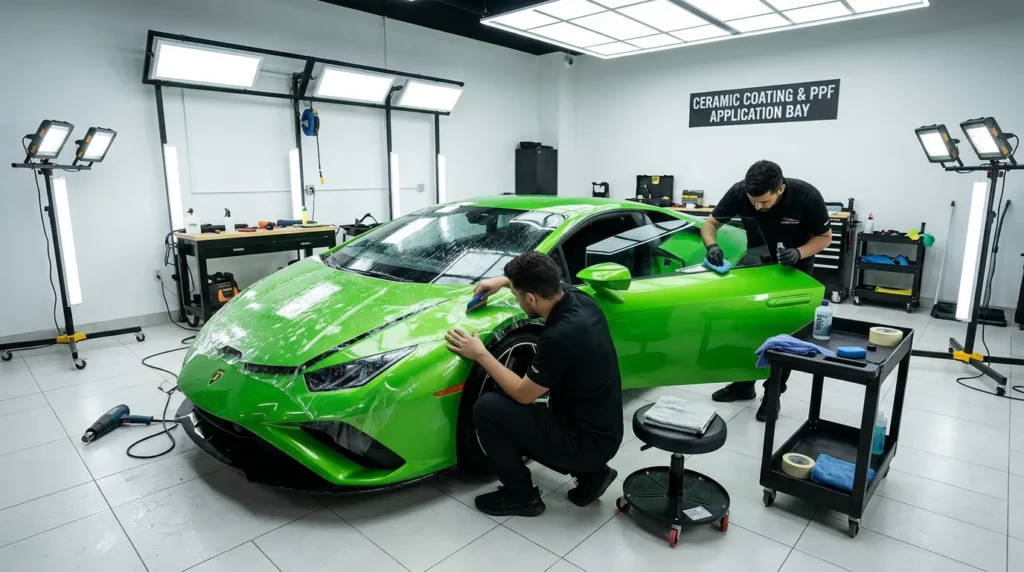
Ceramic coating is still worth considering in Denver because it helps with the daily problems that happen more often than hail, including sun, dust, bugs, winter film, and road grime.
Ceramic Coating vs. PPF for Denver’s Hail and Road Salt also needs a clear answer on PPF and hail. PPF is stronger than ceramic coating for impact, but it is still not true hail-dent protection.
PPF can help reduce damage from small road debris, rock chips, and light abrasion. It may help limit some surface marring from small hail in certain cases, but it cannot stop metal panels from denting when hail hits with enough force.
The catch is that hail damage is not just a paint problem. It is often a metal, glass, and body panel problem. PPF sits on top of the paint. It does not add enough cushion to stop a hard hailstone from denting aluminum or steel panels.
Choose PPF because you want rock chip and road debris defense, not because you expect it to make the vehicle hail proof.
If hail damage has already happened, the vehicle may need paintless dent repair, body repair, glass repair, or panel work before any coating or film plan makes sense.
Ceramic Coating vs. PPF for Denver’s Hail and Road Salt also comes down to winter maintenance. Denver drivers may call it road salt, but Colorado roads can involve a mix of winter road treatments, liquid deicers, sand, salt, and grime depending on route, agency, weather, and storm conditions.
The Federal Highway Administration has discussed Colorado use of liquid magnesium chloride as an anti-icing treatment used before storms to help keep snow and ice from bonding to pavement. You can read more from FHWA Road Weather Management.
CDOT also publishes winter driving guidance and traction laws because road conditions can change fast during storms. You can review that guidance here: Passenger Vehicle Traction and Chain Laws.
What this means for your vehicle is simple. Winter roads leave dirty residue on paint, wheels, rocker panels, rear bumpers, and lower doors. If that residue sits too long, it can make washing harder and may add to staining risk.
Ceramic coating helps that winter film release during washing. PPF helps protect high-hit lower panels from abrasion and road debris. Together, they work better than either product alone for a Denver winter.
Ceramic Coating vs. PPF for Denver’s Hail and Road Salt depends on what part of the vehicle you want to protect.
Ceramic coating is a strong choice for road film and deicer cleanup because it adds slickness and hydrophobic behavior. That means the surface can be easier to rinse, wash, and dry when the coating is maintained properly.
PPF is stronger for areas where road film comes with abrasion. Think rocker panels, lower doors, front bumper, and behind the wheels. Those areas do not just get dirty. They also get hit by grit, sand, slush, and small debris.
A smart Denver setup may be:
If you park outside or drive through winter storms often, ceramic coating alone may help cleaning, but PPF may be the better choice for lower panel defense.
Ceramic Coating vs. PPF for Denver’s Hail and Road Salt has a clear winner for rock chips. PPF is the better choice.
Ceramic coating does not stop rock chips. It is too thin for that job. It may help with cleaning and surface slickness, but it does not absorb rock impact the way film can.
PPF is designed to take hits before they reach the paint. It is commonly installed on:
For drivers who use I-70, C-470, E-470, US 36, Highway 285, or mountain roads, PPF is often the first layer to consider. Ceramic coating can then be added for gloss and easier cleaning.
Ceramic Coating vs. PPF for Denver’s Hail and Road Salt may lead you toward coating if your main goal is a cleaner, glossier vehicle that is easier to maintain.
Choose ceramic coating if you want:
Ceramic coating is a strong fit for daily drivers, new vehicles, black cars, luxury cars, Teslas, SUVs, trucks, and vehicles that have recently had paint correction.
It is also a good choice if winter film drives you crazy. A coated vehicle still needs washing, but the grime can be easier to remove with a safe hand wash.
Ceramic Coating vs. PPF for Denver’s Hail and Road Salt may lead you toward PPF if your main concern is impact. Denver Metro roads are rough on the front of a vehicle, especially during winter and mountain driving.
Choose PPF if you want help against:
PPF is a smart first step for new vehicles, Teslas, luxury vehicles, trucks, SUVs, sports cars, and any vehicle you plan to keep for years.
Ceramic Pro Denver installs Ceramic Pro Paint Protection Film, Ceramic Pro Matte Paint Protection Film, Ceramic Pro Urban Paint Protection Film, Ceramic Pro Black Paint Protection Film, and Color PPF.
Ceramic Coating vs. PPF for Denver’s Hail and Road Salt is not always an either-or choice. Many Denver drivers choose both because each product handles a different problem.
A combined plan can give you:
A common order is PPF first, ceramic coating second. The PPF is installed on the selected panels, then coating is applied to exposed paint and sometimes over compatible film. Ceramic Pro Denver can explain the right order based on your vehicle, selected film, selected coating, and coverage plan.
This setup makes sense for drivers who:
For many Colorado drivers, PPF plus ceramic coating is the strongest everyday paint protection plan.
Ceramic Coating vs. PPF for Denver’s Hail and Road Salt should include paint condition. If the paint has swirl marks, haze, water spots, oxidation, or light scratches, those defects may need to be addressed before coating or film.
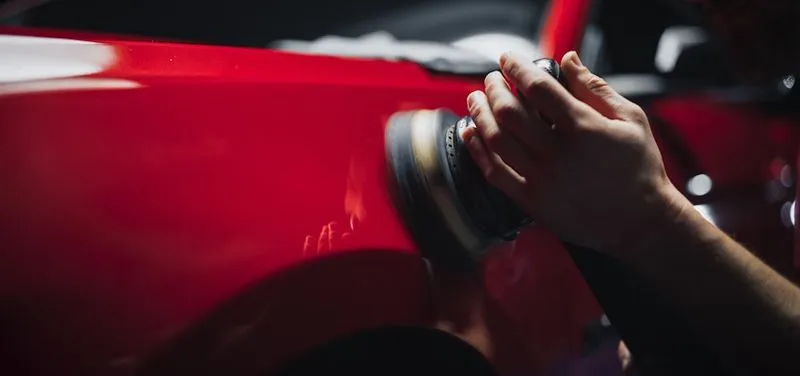
Paint correction is the polishing process used to improve paint clarity before protection is installed.
Paint correction may be recommended if your vehicle has:
Now here’s the thing. A coating locks in the look of the paint under it. PPF can also make existing defects more noticeable in certain lighting if prep is skipped. That is why inspection matters.
Even new vehicles may need prep. Dealer washing, transport, and outdoor storage can leave marks before the owner schedules protection.
Ceramic Coating vs. PPF for Denver’s Hail and Road Salt depends on your driving routine. A commuter, mountain driver, Tesla owner, truck owner, and garage-kept weekend car may all need different plans.
A daily commuter can benefit from ceramic coating for easier washing and PPF on the bumper, hood, mirrors, and rocker panels. This helps with traffic grime, winter film, and road debris.
A mountain driver should strongly consider full front PPF, rocker panel PPF, and ceramic coating. Roads toward I-70, Highway 285, Evergreen, Golden, Idaho Springs, and ski areas can be hard on paint.
Tesla owners often choose PPF early, then ceramic coating for easier cleaning and gloss. Ceramic Pro Denver offers Tesla paint protection film, Tesla ceramic coating, Tesla window tinting, Tesla paint correction, and Tesla Color PPF.
Trucks and SUVs collect grime along the lower doors, tailgate, rocker panels, and rear bumper. PPF can help protect high-hit panels, while ceramic coating can make large panels easier to wash.
A higher-value vehicle may be a fit for full front PPF, full vehicle PPF, ceramic coating, and window tint. This setup can help preserve the finish and improve the care routine.
Ceramic Coating vs. PPF for Denver’s Hail and Road Salt should be explained by a shop that understands Colorado weather, local roads, product limits, and proper installation. Ceramic Pro Denver is Ceramic Pro certified, a Ceramic Pro vendor, and the Elite Dealer for Ceramic Pro in the Denver Metro Area.
Drivers choose Ceramic Pro Denver for:
We serve Denver, CO, Centennial, CO, and nearby areas across the Denver Metro Area, including Aurora, Littleton, Greenwood Village, Lone Tree, Highlands Ranch, Englewood, Parker, Lakewood, Arvada, Lafayette, and the Denver Tech Center.
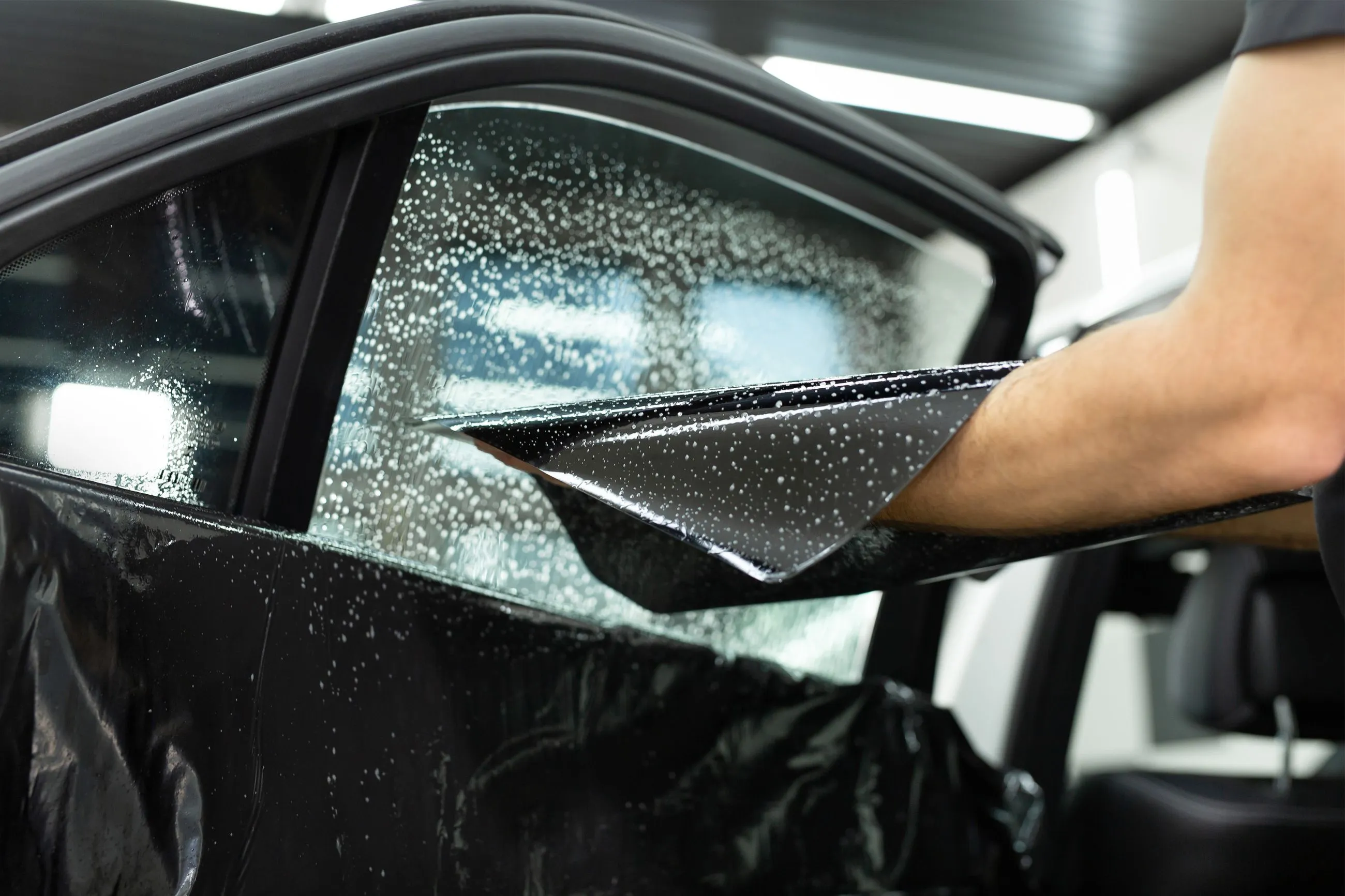
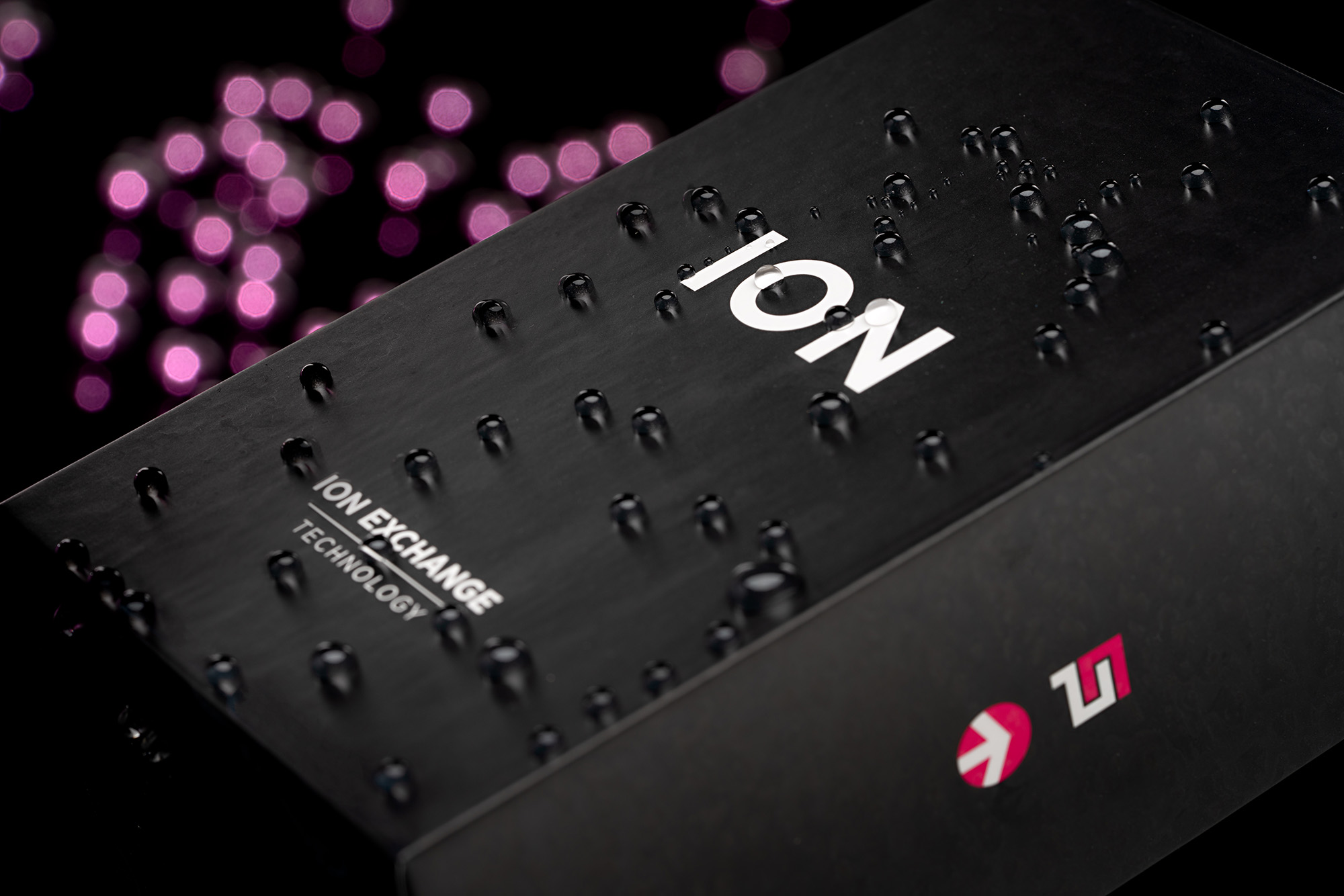
You can also ask about Ceramic Pro ION, Ceramic Pro Ultimate Armor, Ceramic Pro Ultimate IR Window Tint, Ceramic Pro Ceramic IR Window Tint, and vinyl wrap.
Ceramic Pro Denver is open Monday through Friday from 8:30 AM to 6:30 PM and Saturday from 9 AM to 4 PM.
To compare Ceramic Coating vs. PPF for Denver’s Hail and Road Salt, call (303) 875-4356 or visit https://ceramicprodenverelite.com/contact-us.
Ceramic coating is better for gloss, slickness, easier washing, UV resistance, and chemical resistance. PPF is better for rock chips, road debris, and abrasion. Many Denver drivers choose both.
No. Ceramic coating should not be treated as hail protection. It can help with surface care and washing after storms, but it does not stop hail dents.
PPF may help with some surface-level marks from small impacts, but it does not make a vehicle hail proof. Large hail can still dent metal, damage trim, and crack glass.
Yes. Ceramic coating can help winter road film, deicers, and grime wash off more easily. The vehicle still needs regular safe washing, especially during winter.
Yes. PPF is one of the best choices for Denver road debris because it helps defend against rock chips, gravel impact, and abrasion on high-hit panels.
In many cases, yes. If you want both services, PPF is usually installed first on selected panels. Ceramic coating can then be applied to exposed paint and sometimes over compatible film.
Call Ceramic Pro Denver at (303) 875-4356 or visit https://ceramicprodenverelite.com/contact-us. You can also request a consultation to compare ceramic coating, PPF, window tint, Color PPF, and paint correction.
Contact Ceramic Pro Denver to schedule a consultation for paint protection film, ceramic coating, window tint, or paint correction. Our team responds quickly with clear options matched to your vehicle, budget, and timeline. You can call us at (303) 875-4356 or visit us at 6333 South Racine Cir, Centennial, CO 80111 for in person guidance.
Explore the many services we offer by clicking the boxes below