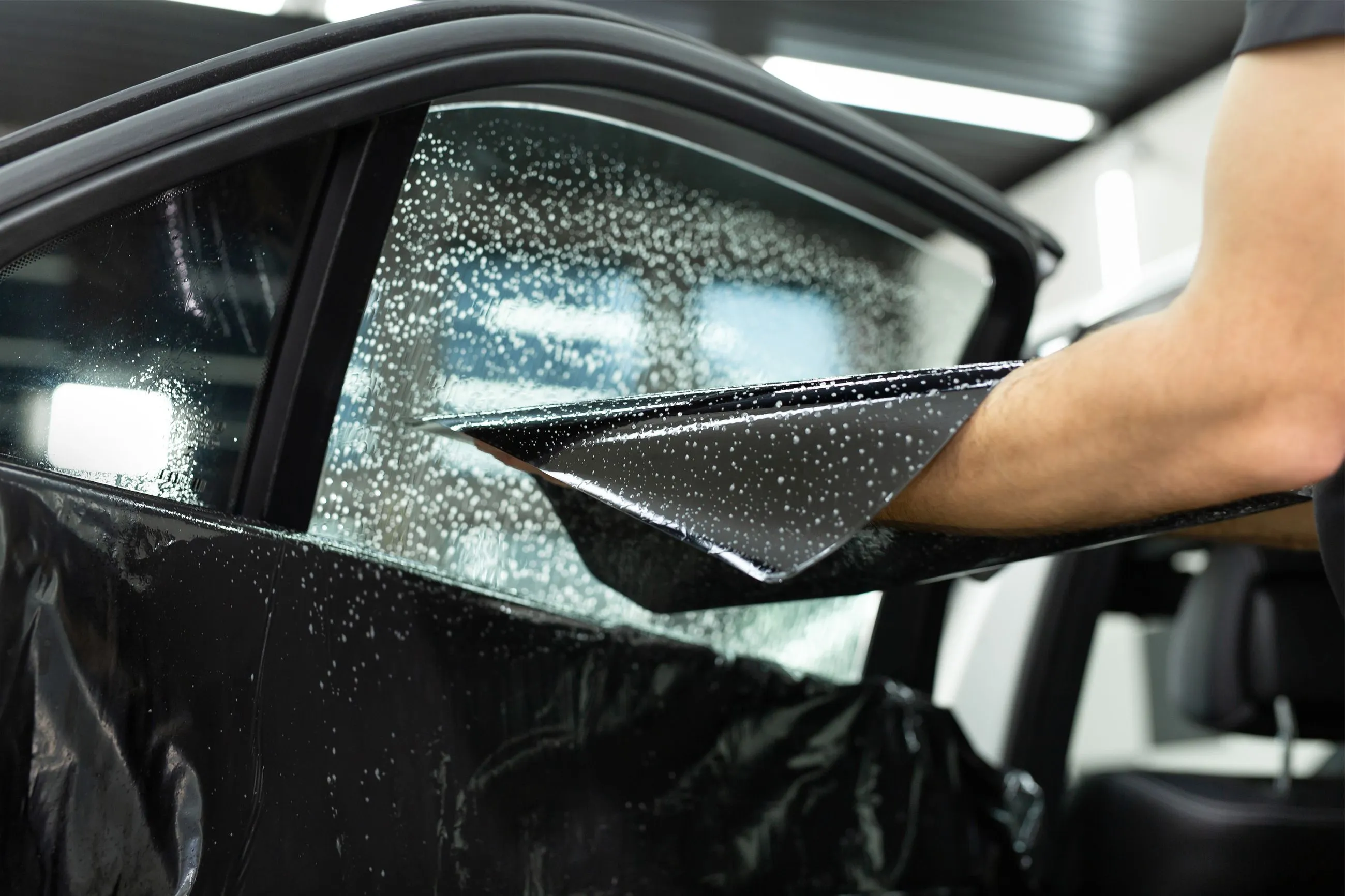

Ceramic Tint vs Carbon Tint in Colorado is worth comparing when your vehicle spends hours under bright Front Range sun. Both film types can reduce glare, block UV radiation, add privacy, and make a parked vehicle more comfortable, but ceramic films can offer much stronger infrared rejection while still allowing drivers to choose lighter-looking windows.
That distinction matters in Colorado. The U.S. Environmental Protection Agency says UV intensity increases about 6% for every kilometer of elevation above sea level because less atmosphere is available to absorb ultraviolet radiation. Denver, CO sits around a mile above sea level, while many mountain drives take vehicles considerably higher.
At Ceramic Pro Denver, we install carbon and ceramic automotive window films for drivers from Denver, CO, Centennial, CO, and surrounding Front Range communities. Our current Ceramic Pro lineup includes Carbon X, Ceramic X, Ceramic IR, and Ultimate IR.
The right film is not always the darkest one. VLT, infrared rejection, UV blocking, nighttime visibility, factory glass, and Colorado tint law all deserve a look.
Here is how Ceramic Tint vs Carbon Tint in Colorado compares when high-altitude sunlight and cabin heat are part of the decision.
Ceramic Tint vs Carbon Tint in Colorado is different from choosing tint based only on color or privacy.
Elevation changes UV exposure.
The U.S. Environmental Protection Agency says UV intensity rises about 6% for every kilometer of elevation above sea level.
EPA guidance explains why: there is less atmosphere above you to absorb ultraviolet radiation as elevation increases.
That does not mean elevation is the only factor affecting UV.
UV exposure also changes with:
Colorado drivers regularly move between elevations too.
A vehicle may spend weekdays around Denver, CO or Centennial, CO and weekends on mountain roads at considerably greater elevations.
Automotive tint will not change the UV Index outside your vehicle, but film can reduce the amount of ultraviolet radiation passing through treated automotive glass.
Ceramic Pro Denver currently lists more than 99% UV blocking for several of its window-film products.
When comparing Ceramic Tint vs Carbon Tint in Colorado, UV protection is only one part of the decision because both carbon and ceramic products can provide strong UV blocking.
The larger difference often appears in infrared heat rejection.
Carbon window film uses carbon-based particles within the film construction.
Unlike older metal-based window films, carbon film does not need a metallic layer to create its appearance or heat-control properties.
Ceramic Pro’s Carbon X uses nanocarbon particles combined with infrared-blocking materials.
Carbon film can provide:
For Ceramic Tint vs Carbon Tint in Colorado, carbon can make sense when you want a combination of shade, UV protection, and heat reduction without moving into a higher ceramic film tier.
Carbon film should not be confused with basic dyed film.
Carbon particles are part of the film’s heat and appearance characteristics rather than relying only on dark dye.
Ceramic window tint uses ceramic-based particles rather than relying on metallic construction.
Different ceramic films use different formulations, so the word “ceramic” by itself does not tell you exactly how much heat a film rejects.
Ceramic Pro currently offers multiple ceramic film levels.
These include:
Ceramic IR adds a strong focus on infrared energy.
Ultimate IR pushes that focus farther.
This gives Colorado drivers several ways to choose film based on heat performance without making every window extremely dark.
That flexibility is one reason ceramic film gets attention in a high-altitude state.
UV blocking is an area where a well-made carbon film can perform strongly alongside ceramic film.
Ceramic Pro Denver states that Carbon X blocks more than 99% of damaging UV radiation.
Ceramic Pro also lists more than 99% UV blocking across several of its ceramic window-film products.
This means you should not assume that carbon tint provides weak UV protection simply because ceramic film sits higher in the product lineup.
For Colorado drivers, the EPA’s elevation guidance makes UV filtering worth looking at closely.
High UV exposure is associated with damage to skin and eyes. UV can also contribute to fading and deterioration of vehicle interior materials over time.
Window film can reduce UV passing through treated glass, but it does not replace other sun-safety measures outside the vehicle.
For Ceramic Tint vs Carbon Tint in Colorado, both film types can provide strong UV blocking when you choose a film with documented UV performance.
The bigger separation is usually infrared rejection.
Infrared energy is tied closely to the heat you feel from sunlight.
This is where ceramic tint can have an advantage over carbon film.
Ceramic Pro Denver currently states:
These manufacturer figures should not be treated as perfectly interchangeable laboratory measurements because wording, film shade, and testing methods can differ.
They do show how Ceramic Pro positions its film lineup.
Carbon X provides heat control.
Ceramic IR puts more weight on infrared rejection.
Ultimate IR sits at the top of Ceramic Pro’s current heat-focused film choices.
For Ceramic Tint vs Carbon Tint in Colorado, ceramic film is worth a close look when:
If appearance and glare control carry more weight than reaching the highest infrared figures, Carbon X may still fit the vehicle well.
Not automatically.
This is one of the most useful parts of the Ceramic Tint vs Carbon Tint in Colorado comparison.
Darkness and heat rejection are not the same measurement.
VLT measures visible light passing through a window.
Infrared rejection measures a different part of solar energy.
A darker carbon film can allow less visible light through while a lighter ceramic film rejects more infrared energy.
Ceramic Pro’s Ultimate IR provides a clear illustration.
Ceramic Pro Denver states that an 80% VLT Ultimate IR film, which looks nearly transparent, can provide up to 95% infrared blocking.
That means you can choose strong infrared control without making a window look heavily tinted.
Now here’s the thing: darker glass may still help with visible glare and privacy.
So there are separate questions to answer:
Do not use one number to answer all five questions.
Ceramic Pro Carbon X is Ceramic Pro Denver’s carbon-film choice.
Ceramic Pro describes Carbon X as a proprietary blend of nanocarbon particles and infrared-blocking materials.
Ceramic Pro Denver currently lists:
Carbon X can fit Colorado drivers who want:
For Ceramic Tint vs Carbon Tint in Colorado, Carbon X can be a sensible choice if you do not need the higher infrared performance associated with Ceramic IR or Ultimate IR.
Ceramic Pro Ceramic X moves into ceramic nano-film construction.
Ceramic Pro Denver describes Ceramic X as a film focused on heat reduction, glare control, and a rich black appearance that pairs well with factory automotive glass.
That can matter for SUVs, trucks, and crossovers with darker rear privacy glass.
Owners often want the front side windows to look closer to the rear.
Ceramic X gives them a ceramic-film option while retaining a darker factory-style appearance.
It can fit drivers who want:
For Ceramic Tint vs Carbon Tint in Colorado, Ceramic X can be the middle ground for someone who wants ceramic construction but does not need the stronger infrared emphasis found in Ceramic IR or Ultimate IR.
Ceramic Pro Ceramic IR is built around nano-ceramic technology with an infrared-focused layer.
Ceramic Pro Denver currently states that Ceramic IR can reject up to 96% of infrared heat.
The shop also lists more than 99% UV blocking.
Ceramic IR may fit a Colorado driver whose biggest concern is the heat entering through automotive glass rather than making the windows as dark as possible.
It can work well for:
For Ceramic Tint vs Carbon Tint in Colorado, Ceramic IR gives you a noticeable move toward infrared-focused performance while still allowing shade selection around appearance and visibility.
Ceramic Pro Ultimate IR sits at the top of Ceramic Pro Denver’s current infrared-focused tint lineup.
Ceramic Pro says Ultimate IR uses nano-ceramic technology and can reject up to 99% of infrared radiation under its stated test conditions.
The company also states that an 80% VLT version can provide up to 95% infrared blocking.
An 80% VLT film is nearly transparent.
That gives drivers another way to think about Ceramic Tint vs Carbon Tint in Colorado.
You can place more weight on heat performance without automatically choosing a dark appearance.
Ultimate IR may fit someone who wants:
Drivers with large windshields, panoramic glass, EVs, luxury vehicles, and cars that spend long periods outside may want to compare Ultimate IR closely with Ceramic IR.
Here is a simple way to compare Ceramic Pro Denver’s current film choices.
| Film | Construction | Published Sun-Control Information | Good Fit For |
|---|---|---|---|
| Carbon X | Nanocarbon with IR-blocking materials | 74% film-only IR blocking, 99%+ UV blocking | Drivers wanting carbon construction, shade, glare reduction, and heat control |
| Ceramic X | Ceramic nano-film | Heat and glare focused | Drivers wanting ceramic construction with a dark factory-style look |
| Ceramic IR | Nano-ceramic with IR-focused layer | Up to 96% infrared heat rejection, 99%+ UV blocking | Drivers placing more weight on cabin heat |
| Ultimate IR | Nano-ceramic | Up to 99% infrared rejection, with up to 95% IR blocking listed for 80% VLT film | Drivers seeking Ceramic Pro’s highest listed infrared performance |
The numbers should be read in context.
“Up to” figures may depend on film shade and testing method.
Ask which specification applies to the exact VLT you are considering.
For Ceramic Tint vs Carbon Tint in Colorado, the broad pattern is straightforward.
Carbon X gives you carbon-based sun control.
Ceramic films give you more room to move toward stronger infrared rejection.
Film type does not determine whether your tint is legal.
VLT does.
Colorado Revised Statutes § 42-4-227 generally requires windows other than the windshield on Colorado-registered vehicles to allow at least 27% light transmittance.
The windshield must allow at least 70% light transmittance.
Colorado also permits windows behind the driver, including the rear window, to allow less than 27% light through when the front side windows and windshield each allow at least 70% light transmittance.
The statute prohibits material that creates a metallic or mirrored appearance.
Colorado also allows certain nontransparent material at the uppermost portion of the windshield when the lower edge extends no more than four inches down and the other statutory conditions are met.
Here is a simple reference:
| Window | Colorado Rule |
|---|---|
| Windshield | At least 70% light transmittance, apart from the permitted upper strip |
| Front side windows | Generally at least 27% |
| Rear side windows | Generally at least 27%, unless the darker-rear condition applies |
| Rear window | Generally at least 27%, unless the darker-rear condition applies |
| Metallic or mirrored appearance | Prohibited |
Carbon and ceramic films can both be non-metallic, but that does not make every shade legal.
The completed glass still needs to satisfy the applicable VLT requirement.
This section is general information, not legal advice. Confirm the current statute when your tint is installed.
A film labeled 30% does not automatically mean the completed window will transmit exactly 30% of visible light.
Factory glass already affects light transmission.
Once film is installed over that glass, the completed combination can measure differently from the film’s standalone rating.
This matters when choosing Ceramic Tint vs Carbon Tint in Colorado near the state’s legal VLT threshold.
Ask about:
This is also why simply ordering “the darkest legal film” can cause confusion.
The film label is only part of the finished window.
For drivers focused heavily on heat, ceramic tint deserves the stronger look.
Ceramic Pro’s current lineup places Ceramic IR and Ultimate IR above Carbon X in published infrared performance.
That can matter when your vehicle spends hours in Colorado sun.
Bottom line, Ceramic Tint vs Carbon Tint in Colorado is not a question of carbon being bad and ceramic being good.
Both can block UV and improve comfort.
Ceramic film gives you higher infrared-focused choices when cabin heat carries more weight in your decision.
Teslas and other EVs can make the Ceramic Tint vs Carbon Tint in Colorado decision even more noticeable because many models use large areas of glass.
Depending on the vehicle, you may have:
Ceramic Pro Denver offers dedicated Tesla Window Tinting for Tesla owners.
If heat is your biggest complaint, compare Ceramic IR and Ultimate IR rather than choosing film only by darkness.
If you mainly want the side windows to look darker while gaining UV and heat control, Carbon X or Ceramic X may fit.
The same thinking applies to SUVs, trucks, and luxury vehicles with large glass areas.
Ceramic Pro Denver installs automotive window tint for drivers throughout Denver, CO, Centennial, CO, and surrounding Front Range communities.
Our shop is located at:
6333 South Racine Cir Centennial, CO 80111
Our team has worked in Colorado automotive restyling for 21 years. Ceramic Pro Denver is a Ceramic Pro certified installer and Ceramic Pro Elite Dealer for the Denver metro area.
Our window-film services include:
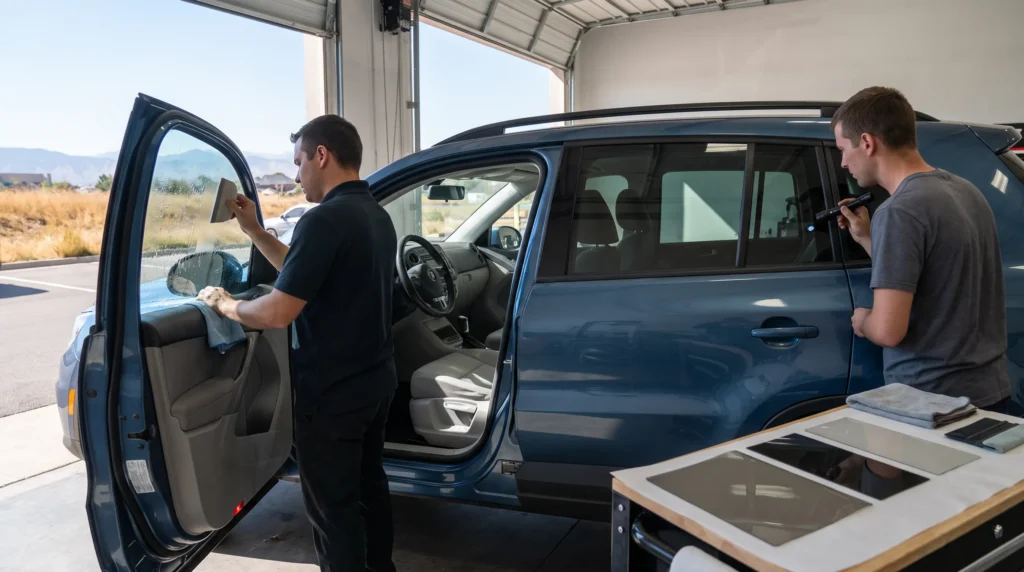
When comparing Ceramic Tint vs Carbon Tint in Colorado, we can show you the film choices on your vehicle and discuss heat, VLT, privacy, night driving, factory glass, and Colorado’s tint rules.
Call (303) 875-4356 or visit the Ceramic Pro Denver contact page to schedule an appointment.
Ceramic film can provide higher infrared rejection than carbon film depending on the products being compared. Ceramic Pro Denver lists Carbon X at 74% film-only infrared blocking, while Ceramic IR reaches up to 96% infrared heat rejection and Ultimate IR reaches up to 99% infrared rejection under the manufacturer’s stated conditions.
Yes. The U.S. Environmental Protection Agency states that UV intensity increases about 6% for every kilometer of elevation above sea level because less atmosphere is available to absorb UV radiation.
Yes. Ceramic Pro Denver states that Carbon X blocks more than 99% of damaging UV radiation. Ceramic film can also provide very high UV blocking, so UV alone is not always what separates carbon from ceramic film.
No. Ceramic Pro states that Ultimate IR can provide up to 95% infrared blocking in an 80% VLT film. An 80% VLT film has a nearly transparent appearance, showing why darkness and infrared rejection should be compared separately.
Colorado generally requires windows other than the windshield to allow at least 27% light transmittance. The windshield must allow at least 70%. Colorado also has a darker-rear condition when the front side windows and windshield each allow at least 70% light through.
Ceramic Pro’s carbon and ceramic automotive films use non-metal construction and are designed to remain signal-friendly for common devices, including mobile phones, GPS, and radio systems.
Ceramic Pro Denver installs Carbon X, Ceramic X, Ceramic IR, and Ultimate IR at 6333 South Racine Cir, Centennial, CO 80111. Call (303) 875-4356 or visit the Ceramic Pro Denver contact page to compare film and shade choices.
Ceramic Tint vs Carbon Tint in Colorado comes down to what you want the film to do.
Carbon X can give you strong UV blocking, heat reduction, glare control, privacy, and a non-metal construction.
Ceramic X moves into ceramic film with a factory-style dark appearance.
Ceramic IR puts more weight on infrared heat rejection.
Ultimate IR gives you Ceramic Pro’s highest listed infrared performance, including strong IR blocking in lighter VLT choices.
Colorado elevation makes UV exposure worth thinking about, but UV blocking is not the only measurement that matters.
Compare infrared rejection separately.
Then choose the VLT around privacy, glare, visibility, factory glass, and Colorado law.
Call Ceramic Pro Denver at (303) 875-4356 or visit the Ceramic Pro Denver contact page to compare carbon and ceramic film on your vehicle.
Contact Ceramic Pro Denver to schedule a consultation for paint protection film, ceramic coating, window tint, or paint correction. Our team responds quickly with clear options matched to your vehicle, budget, and timeline. You can call us at (303) 875-4356 or visit us at 6333 South Racine Cir, Centennial, CO 80111 for in person guidance.
Explore the many services we offer by clicking the boxes below