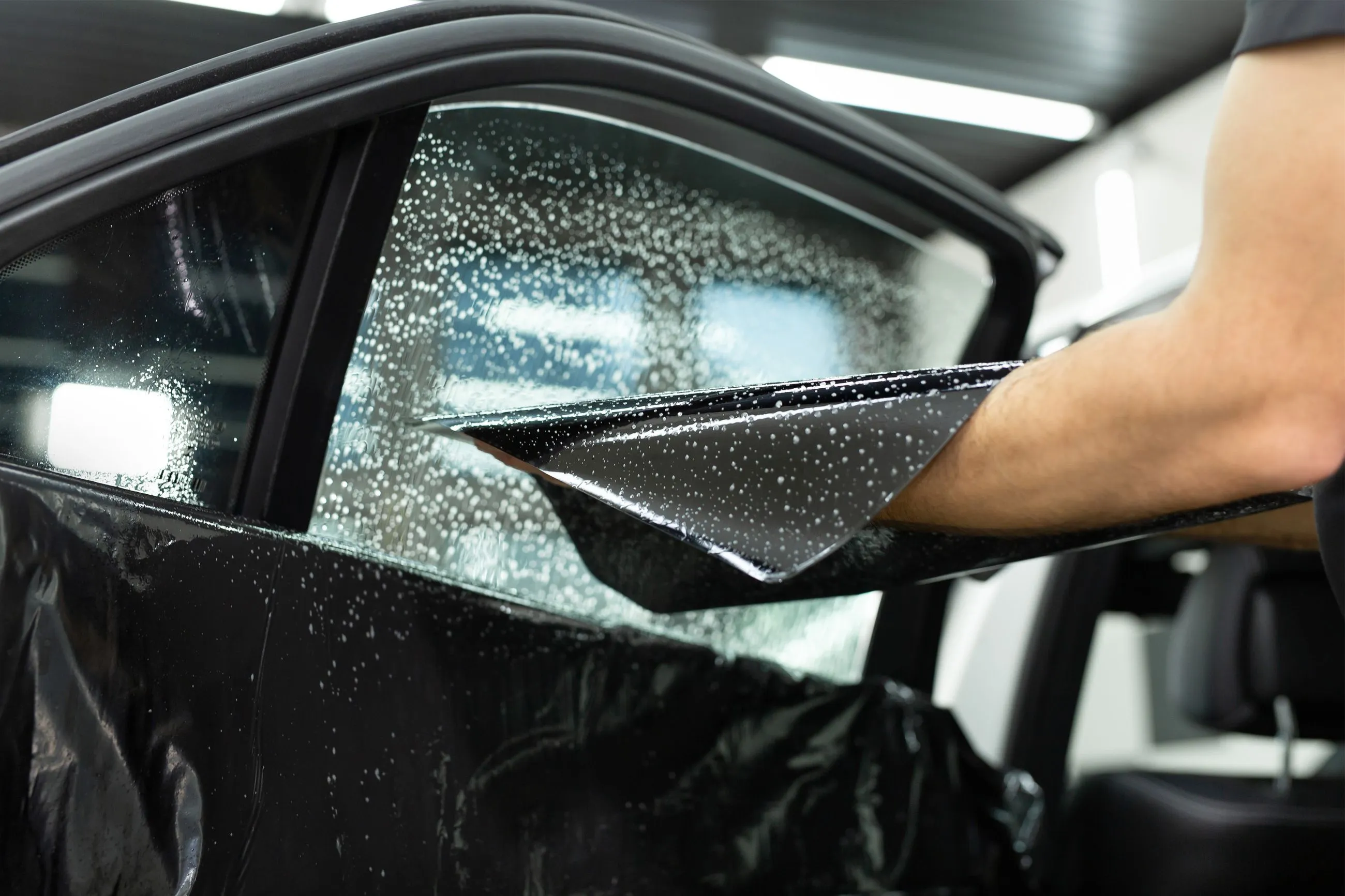

Window Tinting in Lone Tree, CO gives vehicle owners a way to reduce the heat they feel through automotive glass without automatically choosing the darkest shade available. That difference matters in Colorado, where bright sun can heat a parked cabin and make sunny trips around the south Denver metro less comfortable.
At Ceramic Pro Denver, we install Ceramic Pro window films for vehicle owners from Lone Tree, CO, Centennial, CO, Denver, CO, and surrounding areas. Film choices include Carbon X, Ceramic X, Ceramic IR, and Ultimate IR, giving you several ways to balance heat rejection, visible light, glare, privacy, and appearance.
If heat is your main reason for researching Window Tinting in Lone Tree, CO, start by looking beyond tint darkness. Infrared rejection, total solar performance, VLT, existing factory glass, and Colorado law all play a part in choosing a film that makes sense for your vehicle.
Window Tinting in Lone Tree, CO is often researched because a vehicle feels hot even when the air conditioner is running.
Sunlight reaches a vehicle through the windshield, side windows, rear glass, and any panoramic roof glass. Automotive window film can change how much solar energy passes through treated glass.
Here is why film selection matters. Two films can look similar from outside while handling infrared energy very differently.
A dark appearance tells you how much visible light gets through. It does not tell you the whole story about heat performance.
This is one reason ceramic films are popular with vehicle owners who want heat rejection without making the cabin excessively dark.
Ceramic Pro currently divides its automotive tint family into four film lines:
Each has its own construction, shade range, and heat performance.
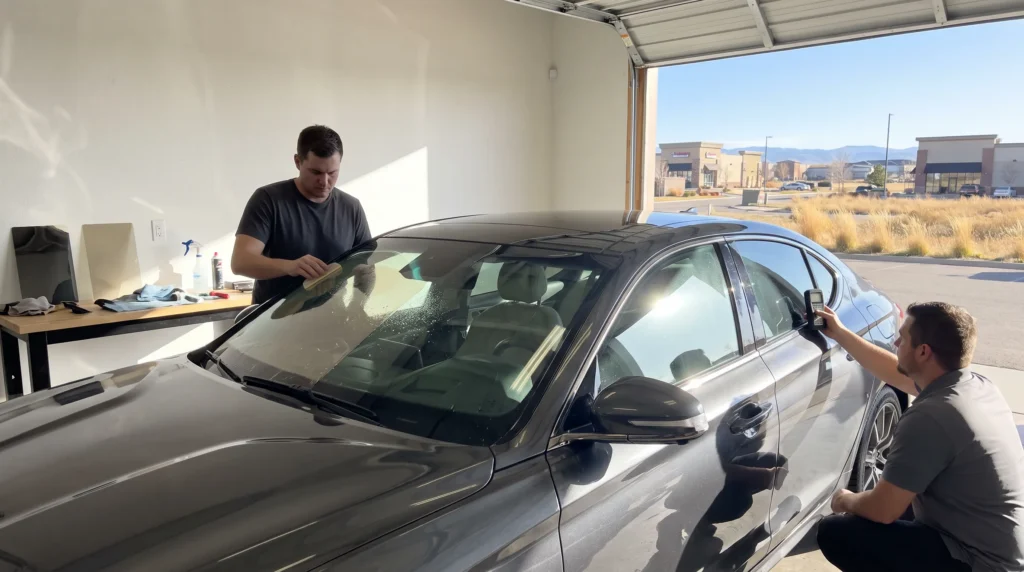
For Window Tinting in Lone Tree, CO, the right film depends on whether you care most about heat, glare, privacy, a factory-matched appearance, or a mix of those goals.
Sunlight contains energy across different wavelengths. Automotive tint films are made to manage portions of that energy before it enters the cabin.
Infrared radiation is closely associated with the heat you feel through glass. A film built for high infrared rejection can reduce that incoming energy.
Ceramic Pro’s current window tint comparison lists its film family in rising heat-performance tiers, starting with Carbon X and moving through Ceramic X, Ceramic IR, and Ultimate IR.
Ceramic Pro lists maximum heat rejection figures of:
| Ceramic Pro Film | Manufacturer’s Listed Maximum Heat Rejection |
|---|---|
| Carbon X | 95% |
| Ceramic X | 96% |
| Ceramic IR | 97% |
| Ultimate IR | 99% |
These are manufacturer ratings and should be read within the testing methods used for each film. Your own results depend on the selected shade, vehicle glass, glass area, weather, cabin materials, and other conditions.
What this means is that Window Tinting in Lone Tree, CO should not start with the question, “How dark can I go?”
A better starting question is, “How much heat do I want the film to reject while keeping the amount of visible light I prefer?”
Many people connect darker glass with a cooler vehicle.
There is some logic behind that idea because dark films reduce visible light, but visible darkness and infrared rejection are separate measurements.
A light ceramic film may reject a high percentage of infrared energy while still letting much more visible light into the cabin.
Ceramic Pro’s Ultimate IR data is a good illustration.
The manufacturer’s window film specification sheet lists Ultimate IR in shades ranging from very dark film to near-clear configurations. Ceramic Pro states that its Ultimate IR 80 film can provide up to 95 percent infrared rejection in the listed test range, even though the film is designed to retain a much lighter appearance.
That makes lighter high-IR film worth discussing when Window Tinting in Lone Tree, CO is mainly about cabin heat rather than privacy.
You might prefer lighter film if:
A darker legal shade can still make sense when glare and privacy also matter.
The real question is which mix works for your vehicle.
VLT stands for Visible Light Transmittance.
It describes the percentage of visible light that passes through glass or window film.
Higher VLT means more visible light passes through.
Lower VLT means less visible light passes through, producing a darker appearance.
A simple visual guide looks like this:
| VLT | General Appearance |
|---|---|
| 80% | Nearly clear |
| 70% | Very light |
| 50% | Light |
| 35% | Medium-dark |
| 30% | Dark |
| 20% | Very dark |
| 5% | Extremely dark |
These descriptions are only a visual reference.
When choosing Window Tinting in Lone Tree, CO, you also need to account for the glass already installed on the vehicle.
Factory automotive glass does not necessarily transmit 100 percent of visible light before film is added. The film and glass work together once installation is complete.
That becomes especially relevant when you are selecting a shade close to Colorado’s legal limit.
Colorado Revised Statutes § 42-4-227 sets the rules for window material on Colorado-registered motor vehicles.
Colorado law generally requires windows other than the windshield to allow at least 27 percent light transmittance.
The windshield must allow at least 70 percent light transmittance.
Colorado also allows an exception for windows behind the operator. Rear side windows and the rear window may have less than 27 percent light transmittance when the front side windows and windshield each allow at least 70 percent light through.
The statute also prohibits material with a metallic or mirrored appearance.
Colorado permits certain material along the top portion of a windshield when its lower edge does not extend more than four inches from the top and the remaining statutory rules are met.
Here is the short version:
| Glass Area | Colorado Rule |
|---|---|
| Windshield | At least 70% light transmittance, apart from the permitted upper section |
| Front side windows | Generally at least 27% |
| Rear side windows | Generally at least 27%, with the statutory darker-rear exception |
| Rear window | Generally at least 27%, with the statutory darker-rear exception |
| Metallic or mirrored appearance | Prohibited |
This is general information rather than legal advice. Check the current Colorado statute when choosing your film because laws can be amended.
Window Tinting in Lone Tree, CO should be planned around the finished window reading, not only the shade name printed on a film sample.
This is where film specifications become useful.
Ceramic Pro’s published window film sheet shows that a film’s standalone VLT can differ from its VLT after being placed on automotive glass.
The manufacturer’s sheet lists Ultimate IR 30 at 30 percent VLT for the film by itself. When tested on the automotive glass used for Ceramic Pro’s specification sheet, the listed VLT is 26 percent.
Ultimate IR 35 is listed at 36 percent film-only VLT and 30 percent on the manufacturer’s test glass.
Carbon X shows the same type of change. Carbon X 30 is listed at 30 percent VLT for the film and 26 percent when installed on the test automotive glass.
Here’s what matters. A film marked “30” does not guarantee that your completed window will measure 30 percent.
Your vehicle’s factory glass has its own starting point.
For Window Tinting in Lone Tree, CO, ask what the expected finished VLT will be on your actual vehicle before choosing a film near a statutory threshold.
Carbon X is Ceramic Pro’s carbon-based tint line.
The current Ceramic Pro manufacturer page describes Carbon X as a non-metal carbon film designed to reduce heat and glare without interfering with GPS, cellular, radio, or other common vehicle signals.
That can make Carbon X worth considering if you want Window Tinting in Lone Tree, CO with:
Ceramic Pro’s current comparison lists Carbon X at up to 95 percent maximum heat rejection.
Carbon X can also be useful for owners who want front side glass to look closer to darker factory rear privacy glass.
The final shade still needs to satisfy Colorado’s light-transmission rules.
Ceramic X moves into ceramic film construction.
Ceramic Pro describes Ceramic X as a film with a rich black tone aimed at matching factory privacy glass while rejecting more infrared heat than traditional dyed or carbon-only film designs.
Its current manufacturer comparison lists up to 96 percent maximum heat rejection.
Ceramic X may fit a vehicle owner who wants:
Window Tinting in Lone Tree, CO with Ceramic X can work well when appearance and heat performance carry similar weight in your decision.
Ceramic IR is aimed more directly at infrared heat.
Ceramic Pro describes the film as a nano-ceramic product with a dedicated infrared layer. Its current comparison lists Ceramic IR at up to 97 percent maximum heat rejection.
That makes Ceramic IR worth discussing when heat coming through side glass is one of your biggest complaints.
For Window Tinting in Lone Tree, CO, Ceramic IR may appeal to vehicle owners who want strong heat performance but still want to select a shade based on privacy and visible-light preferences.
The film shade and the heat rating should be considered separately.
You can choose a lighter configuration because you prefer more visible light.
You can choose a darker legal configuration because privacy and glare reduction matter too.
The installer can compare the film with your existing factory glass before you decide.
Ultimate IR is Ceramic Pro’s top heat-focused automotive window film.
Ceramic Pro states that Ultimate IR can block up to 99 percent of infrared radiation under the company’s stated test conditions.
The manufacturer’s published specification sheet is useful because it shows strong infrared rejection across light and dark shades.
Ultimate IR 80 is listed at 74 percent film-only VLT on that sheet and 65 percent when applied to the manufacturer’s test automotive glass. Ceramic Pro lists up to 95 percent infrared rejection for that film within the stated test range.
This illustrates why Window Tinting in Lone Tree, CO does not need to look extremely dark to target infrared heat.
A lighter Ultimate IR configuration may appeal to owners who want:
A darker shade may suit someone who also wants greater privacy and glare reduction, as long as the completed glass meets Colorado requirements.
A good tint setup starts with how you use the vehicle.
Think about when the cabin bothers you most.
Does it heat up while parked during the afternoon?
Do you feel heat coming through the side glass during longer trips?
Does bright sun make your eyes tired?
Do you want more privacy when the vehicle is parked?
Do you want the front side glass to look closer to the rear?
Do you travel after sunset enough that a lighter shade would feel more comfortable?
Window Tinting in Lone Tree, CO can be chosen around those answers rather than picking one shade for every vehicle.
Compare Ceramic IR and Ultimate IR first.
Look at infrared performance before deciding how dark you want the glass to appear.
Ceramic X may be worth comparing with the IR-focused films.
Its dark tone is made to pair well with factory privacy glass.
Carbon X gives you a non-metal carbon choice with heat and glare reduction.
Ask about lighter ceramic configurations.
A lighter film can still target infrared energy.
Bottom line, Window Tinting in Lone Tree, CO should fit your actual vehicle and how you travel around Lone Tree, CO, Centennial, CO, and Denver, CO.
The film is only one part of the decision. Coverage matters too.
Front side glass can let a lot of sunlight reach occupants.
Tinting these windows can reduce heat and glare while adding privacy.
Colorado’s VLT rules need close attention here.
Some SUVs and crossovers already have darker factory privacy glass behind the front seats.
That darker appearance does not automatically tell you the glass’s infrared performance.
A heat-rejecting film can still be considered over suitable factory glass.
Large rear windows can account for a sizable glass area.
Owners who want heat control across the whole cabin may choose film for the rear glass too.
Colorado requires at least 70 percent light transmittance through the windshield, apart from the permitted upper section described in the statute.
Because factory windshield glass already affects VLT, film selection needs careful measurement.
Do not assume a film label alone tells you whether the finished windshield will meet the law.
Vehicles with large panoramic roof glass can expose the cabin to a broad area of sunlight.
Light high-IR film can be worth discussing when you want heat rejection while retaining the open-glass appearance.
Before applying film to panoramic or specialty glass, ask the installer about the vehicle manufacturer’s glass guidance and your specific model.
EV owners often pay close attention to cabin heat because climate control draws from the vehicle’s stored electrical energy.
Ceramic Pro states that its Ceramic IR film can reduce the load placed on cabin air conditioning by filtering infrared heat.
For Tesla owners, Ceramic Pro Denver also has a dedicated Tesla Window Tinting service page.
Tesla models can have large windshields, frameless side glass, broad rear glass, and panoramic roof sections depending on the model.
Window Tinting in Lone Tree, CO for an EV should account for those glass areas as a complete setup.
A Tesla owner might choose a darker legal side shade for privacy while using lighter high-IR film on other suitable glass.
Another owner may prefer a lighter look throughout the cabin.
The film choice should match the model, factory glass, legal VLT, and the owner’s heat and privacy goals.
Ceramic Pro Denver is a Ceramic Pro certified installer and Ceramic Pro Elite Dealer serving the Denver metro area.
Our shop is located at:
6333 South Racine Cir Centennial, CO 80111
We have served Colorado vehicle owners for 21 years and install Ceramic Pro window films along with several vehicle protection services.
Related services include:
For Window Tinting in Lone Tree, CO, our team can compare film types and shades against your factory glass before installation.
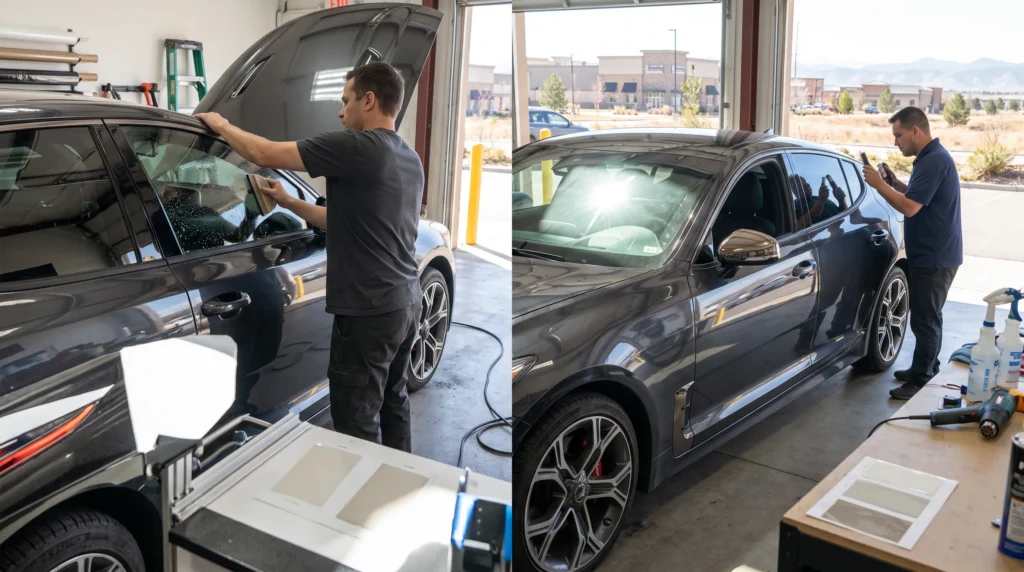
You can discuss how much heat rejection you want, how dark you want the finished glass to look, and how Colorado’s VLT rules affect the choices available for each window.
Ceramic Pro currently lists Ultimate IR as the highest heat-rejection film in its automotive tint family, with up to 99 percent maximum heat rejection under the manufacturer’s stated conditions. Ceramic IR is another heat-focused ceramic choice. Your results will depend on shade, glass, coverage, and environmental conditions.
No. Window darkness describes visible-light transmission, while heat performance depends on the film’s construction and infrared properties. Window Tinting in Lone Tree, CO can use a lighter ceramic film that still provides high infrared rejection.
VLT means Visible Light Transmittance. A 70 percent VLT lets more visible light through than a 30 percent VLT. Lower VLT numbers produce a darker appearance.
Colorado law generally requires at least 27 percent light transmittance through windows other than the windshield. The windshield must allow at least 70 percent. Colorado has a darker-rear exception when the front side windows and windshield each allow at least 70 percent light transmission. Check the current statute before installation.
No. The film and factory glass work together. Ceramic Pro’s specification sheet shows one 30 percent film measuring 26 percent when installed on the automotive test glass used by the manufacturer. The finished reading on your own vehicle is what needs attention.
Yes. Ceramic Pro’s published data shows high infrared rejection in lighter Ultimate IR configurations. This can suit Window Tinting in Lone Tree, CO when cabin heat matters more than creating a dark appearance.
Call Ceramic Pro Denver at (303) 875-4356 or visit our contact page. Our shop is at 6333 South Racine Cir, Centennial, CO 80111, serving vehicle owners from Lone Tree, CO, Centennial, CO, Denver, CO, and nearby areas.
Window Tinting in Lone Tree, CO works best when you choose the film by performance first and shade second.
If heat is your biggest concern, compare Ceramic IR and Ultimate IR.
If you want a factory-style dark appearance with ceramic construction, compare Ceramic X.
If you prefer carbon film, look at Carbon X.
If privacy matters, compare legal darker shades.
If you want a brighter cabin while reducing infrared heat, ask about lighter ceramic film.
Ceramic Pro Denver can look at your existing glass, discuss the completed VLT, and help you compare the available Ceramic Pro films for your vehicle.
Call (303) 875-4356 or visit the Ceramic Pro Denver contact page to schedule Window Tinting in Lone Tree, CO.
Contact Ceramic Pro Denver to schedule a consultation for paint protection film, ceramic coating, window tint, or paint correction. Our team responds quickly with clear options matched to your vehicle, budget, and timeline. You can call us at (303) 875-4356 or visit us at 6333 South Racine Cir, Centennial, CO 80111 for in person guidance.
Explore the many services we offer by clicking the boxes below